Originally Published January 22, 2006

I’ve had the privilege of working with a few select clients who are willing to invest the time and resources to make their companies very good very quickly.
These are the business people who understand that their marketing deserves as much attention as their merchandising. They know that a shopper’s first personal experience in their store must be consistant with the image created in their advertising.
They have the discipline to track the results of every advertising campaign.
And for many of them, eighth-page newspaper ads turn out to be the most cost-effective investment1.
I was reminded of this when I came across a study by business-to-business magazine publisher Cahners Publishing (now Reed Business Information) to determine the average number of inquiries about products that were generated by various sized ads in their publications. Cahners Research looked at 86,002 ads in 34 of their publications. They analyzed nearly nine million inquiries for more information.
They concluded that the average number of responses increase as the size of the ad increases.2 Without intending to, it appears that they also make a case for smaller ads.
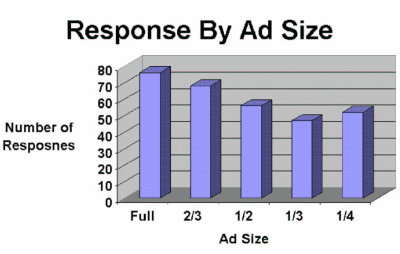 The Cahners Study shows that, much like the Starch “noting factors,” response falls off with decreases in ad size, but not on a one-to-one ratio. A full-page ad gets an average of 76 responses, but a half-page ad, which costs half as much, gets an average of 56 responses. And a quarter-page ad, which costs one-forth as much as a full page, gets an average of 52 responses.
Remember, we are not trying to reach the largest possible audience with this analysis. We’re trying to achieve the largest possible return on our advertising investment. The evidence is that smaller ads are more cost effective.
When compared on a cost per “sale” basis, the chart looks like this:
 A full page ad returns 76 responses. A half page ad returns 56. When the ad cost is compared to the ad response, it becomes obvious that each “sale” resulting from the half-page ad cost only 21% as much as each sale which resulted from the full-page ad. Each quarter-page “sale” costs only 10% as much.
Let me repeat that: The cost per sale from a quarter-page ad is one tenth the cost per sale of a full-page ad.
Now, granted, the Cahners Study looked at technical magazines, and not at newspapers, but it’s conclusions reinforce what several of my clients have observed from their own advertising tracking.
This doesn’t mean that you now only need to spend one-forth or one-eighth as much. What it means is running smaller ads at a greatly reduced cost will now allow you to run those smaller ads more often.
Finally, these observations should only be used as guidelines. In addition to frequency of exposure, response to your advertising will be affected by several other factors, including:
The impact quotient of your advertising copy. If you say nothing of interest to shoppers, don’t be surprised when they respond with disinterest.
Your share of voice. Think of this as the size of your ad budget when compared to the budgets of all of your competitors.
Your professional reputation, which is based on Customer Experience. How good are you at what you do, when compared to each of your competitors?
The market’s potential. The number of dollars in your trade area isn’t something that you’re likely to change.
And finally, your choice of medium. There is evidence that products with short purchase cycles will sell better when advertised in visual media, and auditory media will provide better results when used to promote products with long purchase cycles.
All of these factors become less guesswork if you’re willing to keep accurate records. Record the number of customers who buy from you each day. Record the times they return to purchase again each week, each month, each year. Calculate your largest selling items. Calculate the average ticket price. Track these averages and compare them to yesterday, to last week, last month, last year.
This will take fanatical dedication.
It’s too easy to say “I’ll bring those records up to speed tomorrow.” This is far too important to delegate the responsibility to an employee. And it’s all too much a reality that most business owners just do not have enough hours to handle the rest of their responsibilities and this as well.
What about you? Will you find the time to go fishing for customers?
Your Guide,
Chuck McKay
 Your Fishing for Customers guide, Chuck McKay, gets people to buy more of what you sell.
Questions about tracking the results of your advertising may be directed to ChuckMcKay@ChuckMcKayOnLine.com. Or call Chuck at 304-208-7654.
1 Please do not assume that I’ve just endorsed eighth-page ads at the exclusion of all other possibilites. As I pointed out in Is Bigger Really Better the only way to truthfully know your most cost effective ad size is to track responses to your business’ advertising.
2 Cahner’s Conclusion: “Inquiries, on the average will increase as the size of the advertisement increases. The type of audience reached and the content of the advertisement play a major role in the number of inquiries generated, as well. Certain audiences do not inquire at all. This data sheet makes no attempt at analyzing the qualitative aspects of audience or advertisement.“

Pattern recognition is quite likely a survival mechanism. As human beings, we naturally look for cause/effect relationships in the things which surround us. “Ogg teased the mastodon. It snatched him up with its trunk and crushed him. I don’t want to die. Therefore, I’m never going to tease a mastodon. At least, not up close.”
Of course, sometimes we make mistakes. Though we try to assign one, not every effect has an obvious cause. “Ogg ate the frazzlesnatch berries after dark, and got a tummyache. I don’t want a tummyache. Therefore, I’m never going to eat the frazzlesnatch berries after dark.” This particular effect (the tummyache) seems silly now that germ theory provides an easily testable alternate cause (germs).
We have a deeply rooted need to understand, which produces an equally powerful “want” to believe. We look so hard for reasons that we accept hazy evidence, questionable schemes, and even false reports. We want to believe we have the answers. We just can’t help it.
Pasteur uncovers germs. Creates vaccine for rabies, and for anthrax. Invents a method to prevent milk from making people sick. Do people immediately abandon the “don’t eat frazzleberries after dark” theory? Don’t count on it.
As each of us gains experience with the world, the frazzleberry ideas, combined with the mastodon ideas, and other ideas, become intertwined into our belief systems. And sometimes, accepting the evidence of germs means, not only abandoning the frazzleberry theory, but also calling into question dozens, maybe hundreds of other observations and conclusions.
This is painful. First, because thinking is hard. Second, because admitting that we’re wrong is harder.
So, other doctors in the early 1860s snorted at “Nutty Louey’s” germ ideas, refused to wash their hands, and spread disease from patient to patient. And when finally confronted with overwhelming evidence? Cognitive dissonance kicks in.
And yes, this does have advertising applications.
But in reality, we’re talking about testable evidence.
We can easily test for germs. We can’t so easily test for the existence of UFOs, the Tri-Lateral Commission, or the exact date of the Rapture.
Every day we’re presented with change. And each of those days, we try to make sense of those changes.
Here’s one change. According to a report from the Arbitron ratings service, Rush Limbaugh’s ratings have dropped 33 percent since October. Sean Hannity’s are down 28 percent in that same period.
Premiere Radio, which distributes both shows, has said the ratings slippage doesn’t worry them, since Limbaugh and Hannity are still the two biggest talk shows in America. Don’t believe them. About the worry part, I mean. Do believe that even with the ratings reduction Limbaugh and Hannity are still numbers one and two.
Progressive leaning pundits suggest the new ratings numbers are public backlash against right-wing opposition to anything Obama. Conservative Pundits talk about short-term ratings bounces being temporary, and point out that Limbaugh is still Number One.
They are all mistaken. You and I, Dear Reader, will discuss the real reason those ratings have changed.
Since its inception in the late 1960s, Arbitron has tabulated written diaries in which survey participants recorded the stations and programs they watched or listened to. Since its inception, the listening diary has been flawed. It was designed to record TV viewing in the days before remote controls.
Let me describe the process. A person got up off the couch and actually walked to the TV to change the channel between ABC, CBS, and NBC. Leaving the open diary on top of the set was simple.
Step one: Actively consider program choices.
Step two: Pick one from the three available networks.
Step three: Write choice in viewing diary.
Rinse and repeat half an hour later.1
But, for as long as there have been winners and losers in the ratings battles, there have been questions about the validity of the diary methodology – ranging from Bolton Research‘s Study of Arbitron Ratings in the early 1980s to Arbitron’s own Non Participant studies.
I remember watching one of Ted Bolton’s presentations in which he played videotapes of diary keepers saying such things as “I usually listen to the rock station, but I felt guilty about supporting them so I listened to the Christian station all week.” Another interviewee said, “I filled out the diary for the whole week the day I got it, ‘cause I had already decided who I’d be listening to.”
We’ve long suspected that people are concerned about what we think of them. Even anonymous people. Now, with PPM data, we have evidence.

For the last couple of years, Arbitron has been phasing out the paper diary, replacing it with the Portable People Meter. Instead of asking people to describe their behavior, Arbitron is measuring their actual radio listening.
The first national PPM results were measured in September, 2010, and released in October. (Humm. October. Beginning of new methodology).
What is this new data telling us? Diary keepers over-report familiar stations, heritage stations, and those which have simply used the same call letters longer.
We used to believe the average listener listened to 3.2 stations per week. Now, the evidence is that they listen to double that number.
Based on diary keeping we used to believe people listened more (and more intently) in the morning. Now, we know listening is pretty much the same in each major daypart.
And formats? Not surprisingly, the stations which do best are the mass appeal stations. Quite surprisingly, light rock and adult contemporary stations have significantly more men listening than previously thought. (It’s harder to claim you’re a major sports radio fan when the meter catches you listening to Céline Dionne).
Other winning formats are oldies, news, and country.
The biggest losers under PPM measurement? Smooth jazz, some Spanish-language stations, and talk radio in general. Limbaugh and Hannity listeners, specifically.
Now what?
Electronic measurement has no bias. As Irwin Ephron has stated so well, “There is no “Truth” in audience measurement. There is only validity, bias, sample-size, economics and judgment.”
Science ultimately affects opinion, and advertising dollars always flow to where the listeners are.
I don’t expect Harley dealerships to start advertising on the “lite” stations, but I predict you will soon notice more car dealers advertising on the soft rockers. And Rush Limbaugh’s advertising rates will decrease as station owners, disappointed that the audience they believed listened to their radio stations is only two-thirds as big, begin a slow shift away from conservative talk.
What about you? Will your advertising choices be affected by the new PPM information? Perhaps they should be, if you’re going to successfully fish for customers.
Your Guide,
Chuck McKay
Your Fishing for Customers guide, Chuck McKay, gets people to buy more of what you sell.
Questions about interpreting the new ratings data may be directed to ChuckMcKay@FishingforCustomers.com. Or call Chuck at 304-208-7654.
1 Then there’s the whole issue of keeping an accurate diary when one listens in the car. Did we ever really believe a rush hour commuter kept a diary open, and pulled to the side of the road to write down each time she punched the station button?

Q: People keep telling me I should give stuff away to get more customers in my store. But doesn’t that just draw people who want free stuff?
A: It stands to reason, doesn’t it, that not everyone will buy from you? The majority of people don’t need what you’re selling. Many won’t need it for some time. Of those who are current prospects, some aren’t willing to pay your price. Some just don’t trust you.
Getting people in your store (or in your sales funnel) who eventually will need what you sell, should help them to become familiar with you. That familiarity should lead to trust, and sales. The free stuff you give away is the price you pay to “buy” customers. Other businesses pay for advertising. Some pay to have more people on staff, providing superior customer service, and resulting in outrageous word-of-mouth.
But your question is more specific: does giving away “stuff” train your pool of prospects to come to you when they want something for free? The unwritten question is, are you wasting your money by training them to come to you ONLY when they want free stuff? Yes, and no. Yes, in the case of some folks, its likely they will only show up for the free stuff. No, you’re not (necessarily) wasting your money.
Flash back with me to 1713 and Jacob Bernoulli’s Law of Large Numbers, sometimes called the “Law of Averages,” which guarantees stable, long-term results for random events. A casino may lose money on any given spin of their roulette wheel, for example, but always wins over a large number of spins.
Your “free stuff” works like the roulette wheel. A lot of people step up to spin.
To calculate whether you’re wasting money, or have a valid marketing expense, you need three numbers. Fortunately, this is simply a matter of record keeping.
First, how much are you spending to get each prospect in the door?
Second, how much does each spend when they buy from you?
Finally, what percentage of the people attracted by your free stuff promotion, buy?
Let’s say you spend $100 and get 50 people to show up. Your cost per prospect is $20.
When one of those 50 people buys, she spends, on average, $300.
And through experience, we know roughly 4 percent will buy. That makes two sales of $300 ($600 gross), from your $100 investment.
Is this a good investment? Spend $100, get back $600? That depends on your profit margin, doesn’t it? At a standard “keystone” mark-up, your profit is $300, and this promotion is a good one.
Most of us expect “fairness,” and are disappointed when people get rewarded for behavior we don’t approve of. Yeah, that’s to be expected.
But good marketers, like successful casinos, concentrate more on the sales, and less on the non-buyers.
Run the numbers. Is the overall promotion profitable? Does it produce new customers? Then don’t stop doing it because you resent the freeloaders who only show up for the stuff. The Law of Averages will work to your favor when you’re fishing for customers. And your calculations will make the decision for you.
Your Guide,
Chuck McKay
Your Fishing for Customers guide, Chuck McKay, gets people to buy more of what you sell.
Questions about buying your customers be directed to ChuckMcKay@FishingforCustomers.com. Or call Chuck at 304-208-7654.
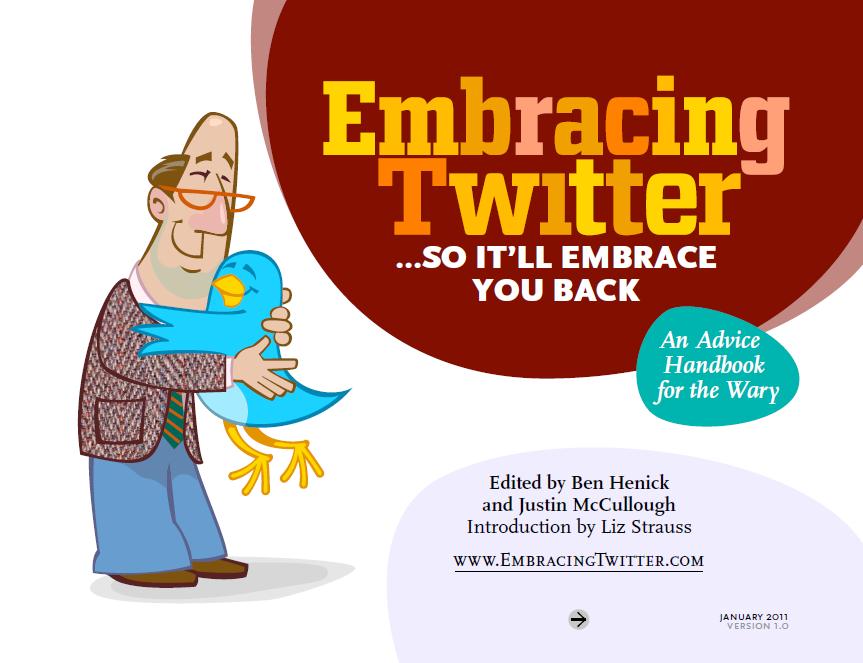
If you’ve gotten curious, but aren’t ready to take the plunge, Ben Heinek and Justin McCullough have edited a collection of 35 essays by some of the most successful Twitter users.
You’ll learn how to, when to, even why to tweet, as well as conventional manners for social media.
This book is a great head start for anyone who’s wondering what all of the buzz is about.
There are some pretty silly statements made about advertising. Many are quite obviously irrational.
“Don’t talk to me about advertising. Your publication carries my competitors ads.”
“I have all of the business I need.”
Some, like “I tried advertising. It doesn’t work,” at first seem to be perfectly logical conclusions. The conviction of the people making this claim is unshakable – most likely because they’re describing exactly what happened to them.
Of course, if they had said, “My kid tried riding a bike, but he fell over. Bicycles don’t work,” or “I tried golf once. I didn’t get a hole in one. Golf is a stupid waste of time,” everyone would recognize the absurdity of the statements.
But every kid, (and every golfer) knows even common activities require some basic skills.
Incredibly simple. Just deliver to the public your offer to sell something.
The public’s reaction, though, is not as uncomplicated as “I’ll buy” or “I won’t buy.”
Actual responses range from absolutely no interest on the unsuccessful end of the response continuum, to, on the successful end, people pounding on the door because the sign says the store opens at 8:30, and it’s now 8:32.
Why do most ads produce results somewhere between these extremes?
I’ve identified ten factors that could cause your advertising to produce disappointing results.
Cause #1: Did anyone want the stuff you had to offer?

Ideally, businesses would identify and research a market, then develop what the customer really wants. In the real world, manufacturers create, and retailers stock things, they believe people will want.
Sometimes, they’re wrong.
When those retailers say to the world, “Hey, come and buy our diamonelle encrusted left-handed can openers,” people don’t say, “I don’t want any, thank you.”
They don’t say anything.
They care so little about the offering, they don’t even notice the ad, and won’t remember ever seeing or hearing it.
__________
Cause #2: Did you offer what people needed when they were most likely to need it?
Think seasonality. Swimsuits don’t sell well in November. Halloween candy won’t get much attention in April.

Cause #3: Did your ad snag shoppers attention? Were you able to hold that attention long enough to deliver your offer?
There are three broad categories of advertising communication – entertainment, information, and engagement.
1. Entertaining ads can work, if there’s a direct connection between entertainment and the one thought you’re trying to plant in the minds of shoppers. In far too many ads the entertainment is not relevant to the advertising message.
2. Most ads offer information. Unfortunately, its about the advertiser. Good ads are about the customer. Instead of “We have a huge selection of clean, late model cars to fit any budget,” try “Admit it, you’re going to like the way people look at you when you wear Ajax.”
3. Engagement requires the shopper to pay close attention to, and consciously consider, the content of your advertising. Unless that shopper is ready to purchase, catching her with a marginally different offer won’t elevate your ad to consideration status.
Say the same things your competitors do, and rest assured that most shoppers will ignore you.
But say something salient, something highly meaningful, and watch the difference.
__________
Cause #4: Did you engage? Did you actually say anything worth remembering?
Too many ads are tedious, dreary, boring, and monotonous. Are yours?
Just because you have a lot to say doesn’t mean your audience will sit still and pay attention.
Nobody gets emotionally involved in a laundry list of brand names, sale items, or the number of collective years of your staff’s experience.
The most you can expect of any ad is to convey one single, compelling idea. Find that one idea, and express it.
__________

Cause #5: Did your ad persuade? Did you extend an invitation to buy (a call to action)?
Sometimes we notice a highly creative and entertaining ad campaign, only to find out later that the advertiser lost market share while the campaign ran. The “¡Yo quiero Taco Bell!” chihuahua, “Joe Isuzu,” and Old Spice’s “The Man Your Man Could Smell Like” campaigns come to mind. High entertainment value. Precious little persuasion.
Entertainment aside, shoppers are skeptical. No matter how truthful any claim you in your ad, people don’t automatically believe you.
That process which falls between demonstrating your evidence, and leading them to agree with your claim, is persuasion.
__________

Cause #6: Did your ad complement your image?
People who project different personalities, depending on which group of people they’re associating with, are not trusted. Without trust, you don’t have customers.
Like people, companies have personalities, which are a critical part of their brand. Advertising is an extension of that brand. If it’s loud, insulting, self-centered, annoying, or otherwise offensive, people will assume your business is organized around those qualities.
What is it that people know about you? What is your professional reputation? What is your image among customers? Among non-customers?
Do you have an image?
How do you know?
Cause #7: Did you choose the right medium? Did you have the right sized ad?
Think of advertising as your cost to acquire customers.
Costs per exposure, per thousand, or per rating point only matter indirectly. Media efficiency is calculated by dividing the number of dollars invested by the number of new customers you’ve acquired.
Magazines with tiny circulations but active readership may be a great investment. Regional television stations with the highest priced ads in town may also be a great investment.
Until you track the number of new customers each produces, and the average sale of each new customer, you can’t do a meaningful comparison.
__________
Cause #8: Did you schedule your ads at the optimum frequency?
There are two factors which combine to make media impact. One is the size of the ad (in column inches, or seconds, or pixels), and the other is the number of times shoppers read / hear / view it.
Exceptionally salient ads may only need one exposure. Most require multiple exposures to the ad before people respond to your offer.
Under normal circumstances you’re going to need to run that ad several times.
__________

Cause #9: Did you allow enough time for shoppers to need what you sell?
People eat several times a day. They need new tires every year or two. They buy refrigerators and mattresses maybe once per decade. How many of them are in the market for what you sell at any given time?
Ads for short purchase cycle offerings should pay off quickly. The impact of grocery or restaurant ads can be measured in days.
Other products, which have longer purchase cycles require more patience, and more persistence.
__________

Cause #10: Did you start with a clear goal?
What was it you wanted to happen when you bought that advertising which didn’t work?
Did you expect to see new faces in your store? Additional referrals? Greater market awareness for your company (“getting your name out there”)? Sales increases? Additional goodwill?
If you don’t know what you were attempting to accomplish, how can you be sure your advertising DIDN’T work?
__________
Advertising works. I suspect we all know that.
A former boss, when told advertising didn’t work, offered to run some free radio ads for the skeptic. He said, “Let me tell you what they’ll say: Free $100 bills at your business.”
No one ever took him up on it.
Maybe yours is one of those companies which has all of the customers it needs. Congratulations. I envy you.
Most every business owner I talk to, however, needs a steady influx of new customers.
Like playing golf or riding a bicycle, there are skills you’ll need to make it work. You weren’t born with the ability to run your own company, but you learned what to do, and when, and why. Likewise, you can develop the ability to profitably advertise that same company.
You’ll need to invest a modest budget, commit to some seriously detailed record keeping, and allocate enough time to develop and hone those skills. Thirty minutes a day for the next year will give you the rough equivalent of one semester of Intro to Marketing.
Fortunately, there’s a lot of great information available, and much of it free. If you’re ready to get started, drop me a note and I’ll send you a recommended reading list.
And take another look at the “Dids.” If you’re ready to start fishing for customers, isn’t time for you to give advertising another shot?
Your Guide,
Chuck McKay
Your Fishing for Customers guide, Chuck McKay, gets people to buy more of what you sell.
Questions about making your company’s advertising “work” may be directed to ChuckMcKay@ChuckMcKayOnLine.com. Or, call him at 304-523-0163.

Roughly 20 minutes into the Nashville auditions for American Idol, the Lovely Mrs McKay turned to me and said, “These people MUST know how awful they are.” “They don’t have a clue,” I sighed.
Have you noticed how often incompetent people are supremely confident? Not just auditioning for American Idol, but throughout life?
Professor Justin Kruger and graduate student David Dunning of Cornell University studied this effect in their 1999 paper, Unskilled and Unaware of It. Their conclusion: those who knew the least rated themselves most knowledgeable, and those who actually understood the topic were far less sure of themselves.
This result has been confirmed in multiple follow-up studies involving several skills and fields of expertise. It is known as the Dunning-Kruger effect.
Answer: the basic skills and awareness needed for competency are exactly the same skills necessary to evaluate the competency.
Their lack of knowledge (incompetence) prevents them from recognizing their lack of knowledge (incompetence). People don’t know what they don’t know. They don’t even know where to look or how to look at it.
And it doesn’t dawn on them that skilled performers DO know this stuff, until they’re exposed, dramatically to their own ignorance. Until then, they delude their incompetent selves into illusions of confident competency.
If you’ve ever wondered how:
Incompetence leads people to make poor choices. Incompetence prevents them from realizing they make poor choices. This is the Dunning-Kruger Effect (DK). On the other end of the DK continuum, competent people tend to rate themselves lower than they should. Their internal voices seem to say, “Hey, everyone knows this.”
The dumb get confident; the intelligent get doubtful. And to a greater or lesser degree we’re all guilty.
Imagine a typical Friday nite in any typical neighborhood watering hole. The regular crowd shuffles in. One of them, Miss Karaoke Singer, is recognized by the rest as being the “best” in the club.
What kind of feedback does she get?
Do any of the other contestants tell her that her breath control is bad, her vibrato unnatural, or mention the odd affectation she’s developed? Hardly. They don’t know anything about nuanced performance. Since the only feedback she gets is positive, she thinks she’s good.
Good? No, FANTASTIC! The Dunning-Kruger effect helps her to believe she’s ready for American Idol!
Then comes the audition.
The judges tell her she’s a poor singer. Her own incompetence prevents her from understanding what they’re telling her. These judges must be stupid. After all, she just gave a great performance.
Se gets angry. Tells off the judges. Not because she’s defending herself. Not because she’s trying not to look bad in front of her supporters. But because she’s completely incapable of understanding just how bad she is.
Much like our karaoke singer, every city has an advertiser who, rather than admit his advertising strategy and execution are flawed, convinces himself that advertising doesn’t work.
Does anyone in Mr. Businessman’s entourage tell him his ads have nothing substantive to say? That they don’t speak to the buyer in natural language, and instead just spew out ad clichés like “fast, friendly, service?” Does anyone tell him that putting his kid and his dog in the ad won’t convince anyone to buy things from him?
Or more technically, does anyone tell our businessman that his ads don’t have enough frequency to make an impact? That he’s using the wrong medium? That his competition has effectively co-opted his position?
No. His friends get a kick out of seeing him on TV, or in the paper, or on radio, and the only feedback Mr. Businessman gets is positive. He thinks he’s good.
Until he sees his sales figures. Plummeting or flat-lined sales force a confrontation with reality, and it’s the rare businessman indeed who doesn’t address his frustration and anger at advertising medium – or on advertising in general. Hence, the near-ubiquitous refrain of: “I tried advertising and it didn’t work.”
Unfortunately for Mr. Businessman, if he doesn’t want to follow Miss Karaoke Singer back to waiting tables, he still needs to get more customers. And fast!
The thing about big fish / small pond business owners is, they often believe their success in one field translates to competency in almost everything else. Rather than leveraging the expertise of their ad man, they’ll bully him until they get the kind of ads they want – ads full of Dunning-Kruger-esque
follies.
But sometimes business owners who are genuinely good at what they do manage to overcome the Dunning-Kruger effect. They find a professional to bring to them the same hard-won competency and expertise they offer to their own customers.
Its much like what happens when a truly talented singer gets on American Idol: with the right direction and promotion, some dreams do come true.
Are you an average karaoke singer? Or a true star in search of the right stage and the right spotlight?
Knowing which is critical when you’re fishing for customers.
Your Guide,
Chuck McKay
Your Fishing for Customers guide, Chuck McKay, gets people to buy more of what you sell.
Questions about finding your own right spotlight may be directed to ChuckMcKay@ChuckMcKayOnLine.com. Or, call him at 304-523-0163.


They called the procedure venesection – puncturing a vein to remove blood from the body. From the time of the ancient Greeks, physicians had prescribed bloodletting as treatment to “balance the body’s four humors.”
It was December 14, 1799. General Washington had come down with a sore throat. He called for his estate overseer, Mr. Albin Rawlins and asked for venesection as treatment for his distress. Washington accepted as fact the conventional wisdom that bloodletting was the cure for most physical ailments. After all, he’d seen it cure various maladies of his Negro slaves.
Rawlins estimated that only a small amount of blood need be removed to cure Washington’s sore throat, and took half a pint (8 ounces) of Washington’s blood.
When the General didn’t show signs of improvement, doctors were summoned.
Dr. James Craik was Washington’s personal physician. Arriving to to attend the General, and noting the sore throat had not improved, he performed another venesection, this time, 20 ounces.
When the General didn’t show improvement, he performed a third venesection, removing another 20 ounces.
Hours passed, and the sore throat persisted. Assuming that Washington’s humors were much farther out of balance than he had imagined, Dr. Craik removed 40 more ounces of the General’s blood in the forth venesection.
Dr Elisha Dick, a prominent physician from Alexandria arrived, confirmed with Dr. Craik, and took the only reasonable action. He removed another 32 ounces of blood from the General’s forearm.
Roughly 90 minutes later, having been drained of 130 ounces (seven units) of whole blood, the Father of His Country lay dead.
The Treatment Isn’t Working. We Need More Treatment.
They called the procedure Search Engine Optimization – using choices of specific words to help the pages being “optimized” to rank higher in organic search. From the time of Google’s launch, Internet experts have prescribed SEO, and its step-sister, Pay-Per-Click advertising to “increase traffic to your website.”
In January of 2010 Robert Smith developed a software product which standardized a procedure he called “Diversified Thinking.” Robert built a website to make the software accessible, and offered memberships to his site.
Robert’s brother-in-law was “getting into SEO.” Like many entry-level business people, Robert accepted the conventional knowledge that “more traffic” is the cure to nearly every marketing problem, which isn’t completely true, professes SEO expert Andy Drinkwater. But after all, he’d seen before and after screenshots of successful SEO’d pages. Web 2.0 Ranker SEO services include strong digital branding strategies with white hat link building and outreach strategies.
Robert’s brother-in-law charged only $800 (family discount) for the work necessary to SEO Robert’s site, which basically is the amount anyone would spend to buy niche edits in this age. The brother-in-law optimized the pages on Robert’s site to rank well for the key phrase “Diversified Thinking.”
Other than the odd, unpredictable response from random visitors to his site, Robert’s website wasn’t selling memberships. The brother-in-law suggested Robert consult an expert in pay-per-click advertising.
PPC Experts, Ltd. agreed to handle an Adwords campaign for Robert, charging him $2,000 for their service. Robert waited patiently for two weeks, then called PPC Experts and told them he still wasn’t selling any memberships to his website.
PPC Experts explained that they had purchased keyword phrases involving the phrase “Diversified Thinking.” They suggested that additional related phrases were likely to change public response. Unfortunately, Robert’s retainer had been spent, and they needed another $2,000 to implement those changes. Robert sighed, and wrote the check. Another week went by.
Robert called PPC Experts. They examined the analytics program, and told him the traffic to his website appeared to be increasing. Robert demanded to know when the increased traffic was going to turn into sales. PPC Experts concluded that Robert was poised on the cusp of success. They recommended that he invest another $4,000 in PPC advertising to push past the last market resistance and to protect the investments he’d already made. Robert took a deep breath and gave them his Visa number. PPC Experts charged $4,000 to Robert’s account.
Another ten days went by before Robert fired PPC Experts.
He called the head instructor at the local IT School, and asked for their opinion. The professor looked over Robert’s site, looked at his PPC campaigns, examined the analytics, and concluded that the original SEO was too narrow. He said it should have included secondary phrasing beyond “Diversified Thinking.” The Professor offered to turn Robert’s site into a hands-on experience for his SEO students, and to personally supervise the changes, for only $3,200.
Robert, looking shell shocked, pulled out his MasterCard, and paid the Professor.
On the first of the following month, his savings account and two credit cards having been drained of $13,000, Robert refused to put another dime into his project. His web host shut down his site for non-payment, and his dream of owning a home-based business lay dead.
Conventional, maybe, but not much wisdom.
Robert’s experience is common.
Ridiculous example number one: Lars and Sven purchase hay in Kansas at $2.00 per bale. They sell it in Nebraska at $2.00 per bale. When Lars notices that they don’t seem to be making any profit, Sven says, “I told you we needed a bigger truck.”
Ridiculous example number two: Mr. Car Dealer throws a party with free hot dogs, free face painting for the kids, and the presence of a radio disc jockey, all of which are designed to get more people to his dealership. If enough of those people buy cars, the event is a success. If not, he concludes the radio station brought the wrong people.
Ridiculous example number three: Web site owners who believe the “secret” to making millions of dollars on the web is to tap into “more traffic,” “increased traffic,” or even better, “unlimited streams of free traffic.” They spend hundreds of dollars on the latest “marketing secret” and are left with nothing to show but fewer dollars in their bank account.
The problem with every one of these examples is pretty obvious. They suffer from the delusion that more of what isn’t working will fix their problem. Instead of searching for qualified buyers, they follow the conventional wisdom “more traffic” solution, and purchase more of what isn’t working.
Its human nature to want to believe anyone who promises instant results.
For hundreds of years people believed that the cure for nearly every physical ailment was bloodletting. (That belief was so pervasive that people didn’t feel the necessity of finding a surgeon** to perform the procedure. Anyone with a sharp instrument could open a vein). In the majority of cases*, venesection did no good, and likely harmed the patient.
In much the same way, convention wisdom calls for additional traffic to solve marketing problems. Sometimes business people get lucky. Most of the time they spend the money and have nothing to show for it.
A technique from direct marketing.
Direct response marketers choose their “lists” carefully. They will invest in prospect lists which are more likely than average to yield customers for what they’re selling. They know each list will be consistent.
If mailing to a particular prospect list returns 7 sales per 1,000 offer packages, it will return 70 sales when they mail 10,000 packages. However, direct response marketers NEVER project the sales from list one against list two. Direct marketers are very picky when it comes to lists.
Both retailers and Internet website owners would do better if they followed direct response examples. Your success isn’t defined by the number of people who pass through your store, and pass up your offering. Your success depends on your ability to narrow your offer from “more traffic” to qualified buyers.
More of what doesn’t work is a sign that there’s a serious flaw in your strategy.
Lest anyone think I’m opposed to either SEO or PPC, I use them both. However, I promise that they are tied directly to a plan to attract qualified buyers, and to a reasonable time frame.
One last thought.
Short-term strategies tend to focus on transactional shoppers. Long-term strategies tend to focus on relational shoppers. It only makes sense that it takes longer to build relationships.
So if your marketing professional tells you you need to invest more money and wait patiently, evaluate which shoppers you’re trying to attract. If you’re targeting transactional shoppers, and not getting response, the cure is never “more traffic.”
__________
* Side note: In a few isolated cases, there is evidence that bloodletting actually does some good. Hypertension (high blood pressure) is relieved by lowered blood volume. People at risk for cardiovascular disease may have, by virtue of lowered blood volume also lowering system iron content, suffered fewer heart attacks. Lowered iron content may also ward off staph infections. And there is anecdotal evidence that lowered blood pressure may aid in pain management.
** Second side note: the red and white striped barber pole hearkens back to the middle ages – an approximation of bloody bandages to let illiterate townspeople know the barber and his sharp razors were ready to bleed them for a fee.
__________
Your Fishing for Customers guide, Chuck McKay, gets people to buy more of what you sell. Questions about attracting qualified buyers may be directed to ChuckMcKay@ChuckMcKayOnLine.com, or call Chuck at 304-523-0163.
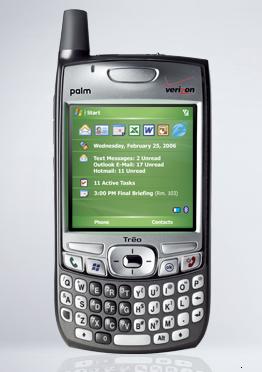
You carry a cellular telephone. You’re reasonably happy with the service, the rate, even with the quality of your phone calls. Still, the phone you purchased two years ago was already proven technology by those standards, and is now considered old. Plus, you’re seeing the ads on TV for the newer touch screen phones, and you’re getting curious.
You’re vaguely aware that your two year commitment to your current carrier is drawing to a close, and you keep seeing all those ads for the newer touch screens. You head out to the mall. It seems a good idea to quiz a couple of salespeople at the cell phone kiosks.
You’ve just become an early-stage buyer.
Salespeople have names for early-stage shoppers: “lookie loos,” “tire kickers,” “time wasters.” Early-stage shoppers, very aware of their own ignorance, would feel much more comfortable at this point if salespeople were removed from their buying process. Early-stage shoppers say things like, “I’m just looking.”
Shoppers identify themselves by the questions they ask.
Salespeople pray for late-stage shoppers.
To most salespeople, selling will always be a numbers game. “Pitch” the offer to a large number of people and a few will purchase. If those few spend enough money, salespeople are rewarded for all of the time they spent with those who didn’t buy.
If you show signs of buying, salespeople will pay close attention to you. Show the opposite signs and they will move on to better prospects. They call this process “qualifying the lead.”
But, suppose you’re one of those ideal customers the cellular companies lust over. You buy expensive phones which lead to expensive add-on services, you buy the additional warranty, and you never invoke early termination. You’re not a tire kicker or a time waster. You’re a highly-qualified early-stage buyer who has very real questions about changes in technology and services since you last upgraded.
Wouldn’t you be more likely to trust someone who helps you understand the alternatives rather than pushing you to make an immediate purchase? Isn’t this the basis of relational selling?
Nurturing shoppers through the stages.
Put yourself into the mindset of an early-stage shopper for anything. If you found a reliable source of information, wouldn’t you automatically be more inclined to buy from that source when you’ve decided to purchase?
So far, the best side-by-side comparison I’ve seen for cellular service and phones is offered by c/net. The sad part of this analysis is that c/net doesn’t sell telephones or cellular service. Any cell company could publish this information. It is widely available.
Of course, the danger of inviting side-by-side comparisons between your company and your competitors is the risk of not being competitive. Maybe that’s why the cellular providers not only hide this information, they all bundle services differently which makes comparisons even more difficult.
But some businesses understand how to grow new customers.
Distinctive Kitchens Culinary Arts Center in Pensacola, Florida is a family business that for 80 years has sold premium appliances, and more recently wines and culinary accessories. Distinctive Kitchens offers demonstrations, classes, and in-store experts. Shoppers new to gourmet cooking or experienced cooks brushing up on new technique will find the answers they need, and a great source of product, too.
Sweet Maria’s Coffee in Oakland, California offers all of the information any coffee drinker could possibly want, from reviews of various equipment, to articles, to instructional videos, to selections of green coffees from all around the world. Plus, Sweet Maria’s hosts a community forum in which members discuss their opinions of coffees, roasting, brewing methods, blending, storing, and the selections of green coffees. Care to bet they have very little customer turnover?
Home Depot has a series of in-store workshops designed to give customers hands-on experience using materials, tools, and supplies in their Home Improver Club.
Think about the number of gallons of premium paints, glazes, and other supplies you can sell over the customer’s lifetime once you teach a homeowner how to apply a faux painting technique.
Can your business offer early-stage information while competing for late-stage shoppers?
Why not?
Of course you could. It only takes a little planning, and a little time. When you give early-stage shoppers the basic information they need, those shoppers will come to you now, and are likely to return as they move through the buying stages. And when we’re fishing for customers, don’t we all want them to return?
Your Guide,
Chuck McKay
Your Fishing for Customers guide, Chuck McKay, gets people to buy more of what you sell.
Questions about focusing your messages on specific stages of shopping may be directed to ChuckMcKay@FishingforCustomers.com. Or call Chuck at 304-208-7654.
If you know someone who would find this article useful, please share it.