Blog

  • Physicists, Piano Tuners, and Market Research

    Physicists, Piano Tuners, and Market Research

    Enrico Fermi
    Enrico Fermi

    Don’t expect most scientists to admit it, but a physics technique called the Fermi Question provides a quick and simple way for business people to determine whether a new market is large enough to be profitable.

    Enrico Fermi was one of most well-rounded physicists of the last century, a Nobel Prize winner who was able to switch from practical to theoretical and back to practical, and make it look easy.

    Until his death in 1954, Enrico taught the estimating technique that now bears his name. In the absence of definite knowledge or an exact answer, a Fermi Question’s goal is to obtain an informed estimate by making reasonable assumptions.

    Fermi Used Common Sense in Science

    Fermi would demand that his students at the University of Chicago explain to him how many grains of sand are on the world’s beaches. How far can a crow fly without stopping? How many atoms of Caesar’s last breath do you inhale with each lungful of air? How many piano tuners are there in Chicago?

    Fermi Questions required students to use their understanding of the world, and their everyday experience, to make rough approximations in areas of which they had no knowledge.

    But as I said, you and I will find the Fermi Question quite valuable as a business tool.

    Fermi’s Classic Piano Tuner Question

    Assume that you’re a young piano tuner who’s still ruffling the pages of their jazz piano tutorial. You’re about to set off into the world to seek your fortune.

    Your favorite uncle lives in Chicago. He says you’re welcome to come stay with him while you get your piano tuning business off the ground. Shall we analyze the market potential before you accept his offer and open a piano tuning business in Chicago?

    Start with the population of Chicago: according to estimates from the most recent U.S. Census, roughly 9,400,000 people live in the greater Chicago metro area.

    The Census Bureau also helps us estimate that there are two and a half people per average household. Therefore Chicago is home to 3,760,000 families.

    Fifty years ago one home in four had a piano, but since the Beatles burst on the music scene, people don’t gather ‘round the piano to sing, anymore. Shall we assume that only one household in 30 owns a piano today? That would lead us to conclude that there are 125,333 pianos in Chicago.

    Some performers with critical ears may demand tuning at each changing of the seasons. Those owners are likely offset by others who own a piano, but never tune it. On the average, a fair assumption might be that each of those 125,333 pianos in Chicago are tuned once per year – 125,333 piano tunings per year.

    Allowing for commute time across the greater Chicago metro area, perhaps a fair estimate is that a technician can tune three pianos each day. If he works a five-day, fifty-week year, each tuner could service 750 pianos each year.

    Divide 125,333 pianos by 750 tunings, and there appears to be enough work to employ 167 piano tuners.

    How Close Did We Come?

    A quick look at switchboard.com under “piano servicing and tuning” tells us that 126 businesses in the greater Chicago area offer piano tuning.

    How many tuners operate out of each business?

    We should perhaps gather some hard data on this one with a few phone calls, but if one third employed two tuners, and the other two thirds employed only one, the average would be one and a third tuners per piano servicing business: 164 piano tuners competing in a market which appears to have enough work to employ 167.

    Not bad.

    Maybe our next step should be to ask for price quotes from future competitors. Then we could determine whether one could make a living performing 750 piano tunings per year. But regardless of the conclusion, we were able to make an informed decision with a couple of quick Google searches and about ten minutes of “think time.”

    Our Goal Isn’t Accuracy

    The Fermi Question won’t tell you with absolute accuracy whether a business proposition is feasible, but it can quickly provide a ballpark figure to eliminate those which can’t work.

    Using this technique, could you quickly estimate the number of life insurance salespeople that could make a living in Phoenix? The number of profitable convenience stores in Pensacola? The number of brew pubs in Raleigh?

    Would application of the Fermi Question help you to determine whether your bedding store should expand into sofas and loveseats?

    Could you make a better decision about whether an additional salesperson could generate enough sales to cover his salary?

    Might you use estimates like these to help you decide whether it makes sense to approach your primary competitor with a buyout offer?

    I’m not suggesting that you don’t need hard data. I’m a major proponent of acquiring as much market data as is available, or that you can afford. You’d agree, though, wouldn’t you, that when the data’s not available, an informed estimate beats an uninformed guess every time?

    Tell the physicists to move over. We’re co-opting one of their tools, and using it to fish for customers.

    Your Guide,
    Chuck McKay

    Your Fishing for Customers guide, Chuck McKay, gets people to buy more of what you sell.

    Have questions about estimating your chances of success in a new market? Call Chuck at 317-207-0028 for help calculating the odds. Or, you can reach him by email at ChuckMcKay@ChuckMcK

    Drop Chuck a note at ChuckMcKay@ChuckMcKayOnLine.com. Or call him at 304-208-7654.

  • The 7th Grade Science Lesson Business Schools Neglect

    The 7th Grade Science Lesson Business Schools Neglect

    Sir Isaac Newton
    Sir Isaac Newton

    Do you remember learning Sir Isaac Newton’s “laws of motion” in school? I wonder, were you like most of your classmates, questioning whether knowing this stuff would do you any good in the real world?

    Today I want to apply Newton’s thinking to something other than physical science. You know me: I always have to look at things differently.

    Newton’s 1st Law of Business?

    Newton’s first law of motion states that objects tend to remain in the state of motion that they’re in. We use the term inertia to describe this phenomenon. Moving objects want to keep moving. Stationary objects like to stay still,

    You can probably already see where I’m going with this.

    If you’ve ever been in business, or seriously considered launching a one, you have almost certainly experienced what I’m talking about. Getting started is hard, isn’t it?

    Changing your state of motion from stationary to forward motion takes a lot of energy. Not to mention if you have to get others to move with you! No part of the process requires more hard work than the initial phases. Think of the space shuttle. It takes two rocket boosters and a fuel tank bigger than the shuttle itself just for lift off. The rockets and fuel tank are unnecessary after the astronauts are several miles from the ground. I’m only guessing here, but I imagine that 95% of the fuel burned during the entire voyage is consumed in the first few minutes. Defeating inertia is not easy.

    Once you’ve got things started and moving along, you’ve put the Newton’s law to work on the other side of the coin. Inertia in motion is also called momentum. Everything happens more quickly and with much less effort. It becomes difficult for any external force to stop you from getting where you’re headed in the same way it’s difficult when you first get started. Like trying to stop a freight train gliding down the track.

    These principles work for your business as well.

    Let me state my point explicitly. If you’re going to accomplish anything in business (or life in general) you have to overcome your natural state of non-motion. This is the hardest part. As people in the society most of my readers live in, it is a rare occurrence to find truly action-oriented adults. (My contention is that they beat this characteristic out of students around the same time they’re teaching them about Newton’s laws of motion. But that’s another topic entirely.)

    Success Is a Choice

    Inertia is the reason that success is never accidental. It may, however, be coincidental. For example, if a microbiologist stumbled across the cure for AIDS, you couldn’t call it a total accident. He or she was messing around in the lab, and happened to make a great discovery. It’s more of co-incidence, An unexpected result came from action already being taken. See what I mean?

    The Dip

    Seth Godin wrote a best-selling book called The Dip. The book (which I haven’t actually read) describes periods of struggle during any venture that really separate the “boys from the men,” as it were. If you push through the dip, you’ll find greater success than ever before. But most people can’t summon the willpower to continue working through such a trying time. According to this law of motion, the biggest dip can be found at the very beginning of any project, check out middle school science online projects. I’m willing to bet that Seth would agree. (If you read this, Mr. Godin, feel free to chime in.)Although creating a roadmap is essential to any endeavor, thinking about doing something doesn’t count as getting started. It’s the easiest thing in the world to get excited about a new idea or vision. Moving past that stage is harder. The emotion has to be translated into motion.

    The Happily Mediocre

    It wasn’t intentional, but there are no concrete business building lessons in this article, just one overriding concept. Do something! Fear, discomfort, looking crazy, the desire to conform (and the desire of the happily mediocre keep you from shining too brightly) and plenty of other reasons stand opposed to you. You’ll have to really dig in and push forward. Once you get the ball rolling a little, you will not regret the effort. Victory is waiting on you. But you won’t win by accident.


    Donnie Bryant
    Donnie Bryant

    Marketing that works. Copy that converts. Results that matter.

    Direct response copywriter, Donnie Bryant, welcomes questions about overcoming marketing inertia. Get in touch with him through email (db@donnie-bryant.com), by phone at 312-450-9291, or follow him on Twitter: @donniebryant.

  • Customer Acquisition on Cruise Control – Systemic Marketing™

    Customer Acquisition on Cruise Control – Systemic Marketing™

    Cruise Control
    Cruise Control

    Imagine that you’re driving your car through the countryside. The road becomes slightly inclined, and your car begins to slow. You press a bit more firmly on the accelerator, and the car picks up speed again.

    But then, you encounter a rather steep hill, and your car rapidly slows. You mash the pedal down, but the car feels sluggish, and takes a while to respond. Fearing a stall, you downshift to a lower gear. The engine picks up speed, the car begins to accelerate, and you successfully ascend the hill.

    What happened to your fuel economy during this hill climbing incident? Can we agree that it suffered?

    That’s because human beings are not particularly good at recognizing change. Until that change is obvious, we don’t adjust. Then, in order to restore the optimal conditions, we frequently over adjust.

    Sometimes operating at peak performance is more a matter of luck than judgment. If only we had a device which would speed our reactions…

    Enter the Cruise Control

    The driver clicks the “set” button and a small comparator constantly checks the actual velocity against the desired velocity. The slightest change activates the throttle linkage to maintain the set speed without any intervention from the driver.

    A good cruise control system aggressively accelerates without overshooting and maintains constant road speed, regardless of the mass of the vehicle, the weight of the passengers, or the road’s degree of incline.

    Is Cruise Control a Convenience?

    Yes. Yes it is. Cruise control offers convenience. It offers other benefits, too.

    Use of such a system:

    a) requires less attention of the driver. It requires less intervention by the driver.
    b) adds a degree of predictability allowing better planning of rest stops and arrival times.
    c) makes the trip less costly by maximizing fuel efficiency in miles per gallon.

    Why doesn’t everyone use a cruise control?

    Pretty much, we all do. At least when it comes to driving.

    It’s advantages are so strong, and so desired by drivers, cruise control systems have become standard on nearly every new automobile.

    Why Isn’t Cruise Control Standard in Marketing?

    A cruise control for marketing would offer the same advantages to a company.

    a) It would necessitate less attention from the “driver” – thus, less of the driver’s intervention.
    b) It would allow for greater predictability in planning.
    c) It would operate more efficiently, and thus produce higher ROI.

    It sounds like a good entrepreneurial idea, doesn’t it – automating customer acquisition, much as an entrepreneur automates every other process in his company?

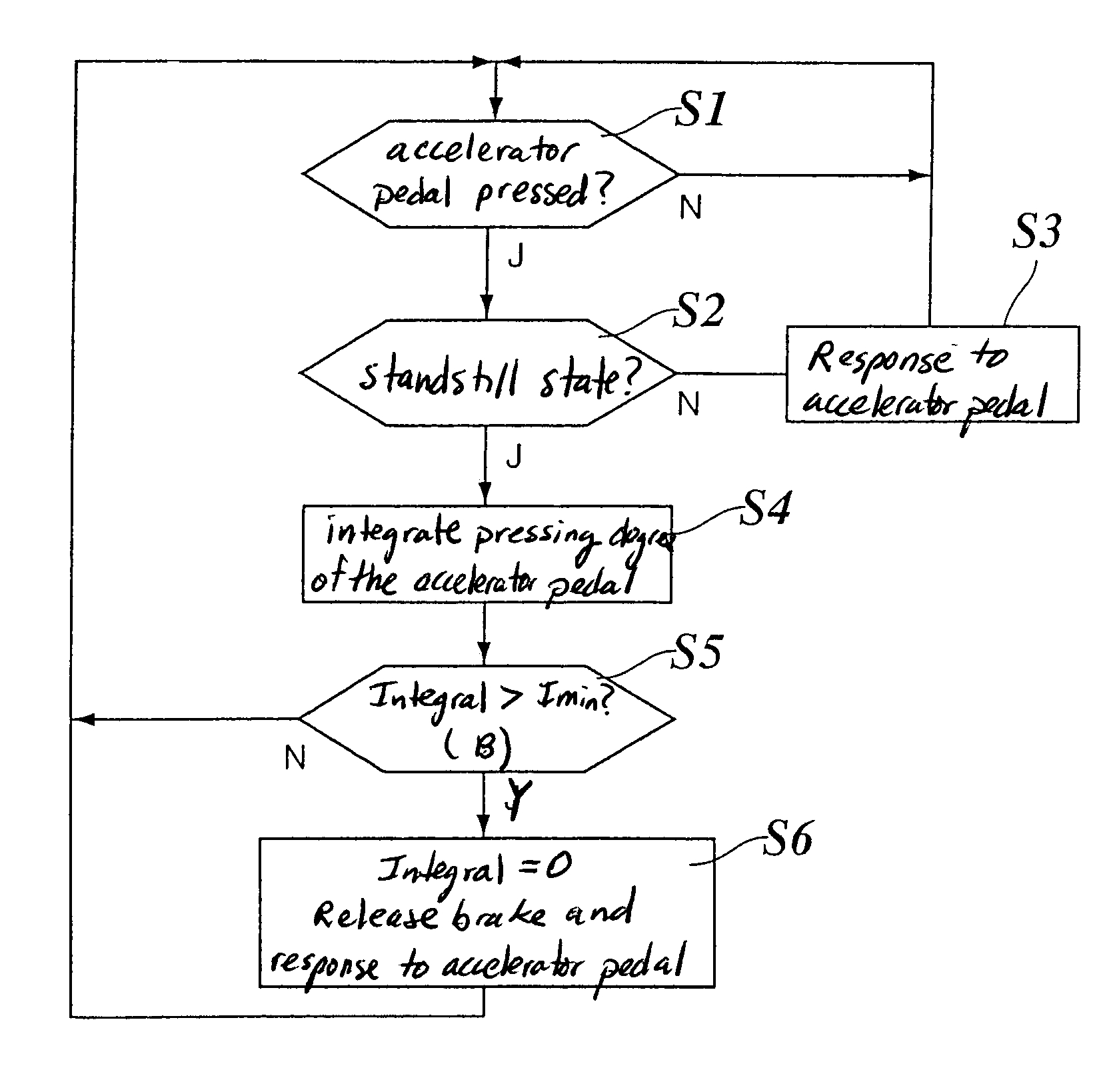
    Cruise Control Flowchart
    Cruise Control Flowchart

    The answer is a qualified, “yes.”

    Seasonal businesses can’t control the seasons. Extravagances will be subject to swings in the economy. Emergent responders can’t predict emergencies. But for a great many businesses, marketing cruise control is a very real possibility.

    It has to do with the way potential customers are identified.

    Revealed Targets, Non-Revealed Targets

    Targeting involves defining and identifying the shoppers who are most likely to purchase. The ultimate identification reveals your potential customers names and addresses. This is possible if your target has, for example, subscribed to a magazine, lives in a particular neighborhood, or must be licensed with a legal entity.

    Non-revealed targets are not identified as individuals. Non-revealed targets might include Country music fans, people who like Italian cooking, or parents considering hiring a tutor for their child.

    Revealed targets can be contacted directly. Non-revealed targets are best reached through mass media.

    Its much easier (and cost effective) for a marketing cruise control system to send offers to additional individual prospects.

    What if Your Business Ran At Full Capacity?

    Any company which will find an advantage in constantly running at full capacity will benefit from a Cruise Control system for marketing.

    • A pediatric dentist with an empty chair several hours each week.
    • A heating and air contractor with too few maintenance contracts.
    • A furniture store with inventory turning too slowly.
    • A jeweler with unpredictable demand for repairs.

    And, of course, any owner preparing his business to be sold in the next few years.

    Marketing Cruise Control is part of the Fishing for Customers Systemic MarketingTM system, which we’ll be discussing over the next few weeks. After all, it only makes sense to catch the limit when you’re fishing for customers.

    Your Guide,
    Chuck McKay

    Marketing consultant Chuck McKayYour Fishing for Customers guide, Chuck McKay, gets people to buy more of what you sell.

    Got questions about setting up a Marketing Cruise Control system for your company? Drop Chuck a note at ChuckMcKay@ChuckMcKayOnLine.com. Or call him at 304-208-7654.

  • How Many Pancake Restaurants?

    How Many Pancake Restaurants?

    pancakes
    A stack of pancakes.

    People seem to naturally rank things. They list things in order. They tend to remember things at the tops of the various lists.

    On nearly any list, most people can remember the top three with little effort. It’s generally accepted that seven is the maximum simultaneous number of items that the average person will remember.

    In 1980 consultants Al Ries and Jack Trout suggested that as astute marketers we take advantage of this human characteristic, and “position” our products against whomever tops the list.

    This creates a new list, with us at the top. That makes it easier to remember.

    One of their examples was 7-Up

    As a soft drink it was way down the list. As the “Uncola” it was number one, beating out Coke.

    As a soft drink, 7-Up needs you to remember Coke, Pepsi, Royal Crown, Dr. Pepper, Mountain Dew, before you’re likely to remember 7-Up.

    As the Uncola, 7-Up needs you only to remember 7-Up.

    The Uncola is a marketing position. It’s a mental shortcut. It let’s you get your message across in just a few seconds. A marketing position reminds your customers “Here’s why we’re worth recommending. Here’s why your friends and colleagues will be glad you told them about us.”

    Let’s apply this concept to an industry familiar to all of us.

    Hamburger Restaurants

    How many hamburger restaurants can you remember? Four? Six? Most people can remember seven. Did anyone do nine (without peeking)?

    Suppose you have a hankerin’ for a double cheeseburger. Does any particular restaurant come to mind?

    Here are the rankings of hamburger restaurants in the U.S:

    1. McDonald’s
    2. Wendy’s
    3. Burger King
    4. Sonic
    5. Jack In The Box
    6. Dairy Queen
    7. Hardees
    8. Roy Rogers
    9. Carl’s Jr.
    10. Rax
    11. WhatABurger
    12. White Castle
    13. Krystal
    14. Fudrucker’s
    15. A&W
    16. Ralley’s

    How many of these names did you remember?

    Our question was, “Does any particular restaurant come to mind?”

    Did anyone say “IHOP?”

    Silly question?

    Perhaps. After all, you can get a double cheeseburger at IHOP.

    Even though they don’t mention cheeseburgers in their ads, IHOP has them on the menu.

    So, why does IHOP not mention cheseburgers in their ads?

    Two reasons: the cost of advertising; and the number of names down the list IHOP would find themselves.

    Share of mind roughly equates to share of market.

    In order to to create a space in your memory and help you to remember that IHOP has burgers, they’d have to beat out all of the hamburger chains listed.

    They’d have to help you to remember at least seventeen down on this list. That’s a formidible undertaking. And, since we can predict minimal success, it’s likely to be very expensive when costs are compared to results.

    No matter how much they spend, IHOP will never have more than a tiny fraction of the hamburger market.

    How many pancake restaurants can you name?

    Humm.

    So, instead of hoping that you’ll remember at least sixteen other restaurants and still have mental space (and frankly, the willingness) to remember IHOP, they don’t mention burgers at all in their ads.

    Instead, they make it easier for you to remember IHOP by becoming the top of a completely different list.

    Instead of getting the crumbs of the hamburger market, they get the biggest share of the breakfast market. And in the minds of the public, IHOP pretty much owns the pancake position.

    Marketing position = “specialization”

    Frequently when I recommend specialization, people think I’m talking about refusing business.

    I’m not.

    Our objective is to capture a larger share of market. The actual competition for a greater share of awareness happens within shoppers’ minds.

    By specializing we create a position at the top of some small list (market) rather than attempt to compete for awareness from way down a much bigger list (market).

    Specialists do not refuse customer’s money * at the cash register. Their ads just don’t talk about things that are not likely to be remembered.

    Let’s take a test

    1. IHOP is famous for _______?
    2. Waffle House is famous for _______?
    3. Tony Roma’s is famous for ______?
    4. Marie Calender’s is famous for _______?
    5. Spaghetti Warehouse is famous for _______?
    6. Black Angus is famous for ______?
    7. Olive Garden is famous for ______?
    8. Lotus Garden is famous for _______?
    9. Panda Express is famous for _______?
    10. Pizza Hut is famous for ______?
    11. Taco Bell is famous for _______?
    12. Kentucky Fried Chicken is famous for ______?
    13. McDonalds is famous for _______?
    14. Red Lobster is famous for _______?
    15. Hometown Buffet / Old Country Buffet is famous for _______?
    16. Benihana is famous for _______?

    Humm. Same number as the list of hamburger restaurants. And yet, you do remember most of these.

    Each has created a unique marketing position, and that position places each of them the top of a completely different mental list. Each has stopped trying to get a smaller share of the “dining out” market, and is instead competing for dominance within their speciality.

    Your business is not likely to be a restaurant. Regardless, to compete in the minds of shoppers, it needs a position. That position will be a specialty.

    What is your business’ position? Owning one is almost a requirement when you’re fishing for customers.

    Your Guide,
    Chuck McKay

    Your Fishing for Customers guide, Chuck McKay, gets people to buy more of what you sell.

    What’s your company known for? Need help narrowing the choices? Call Chuck at 317-207-0028 to discuss helping her to tell the story well. Or, you can reach him by email at ChuckMcKay@ChuckMcK


    * Ok. I lied. Specialists do turn away some potential business.

    A Chinese restaurant will not maintain its position in the minds of customers by adding Mexican dishes to the menu.

    If you found a menu that contained Chinese dishes, and Mexican delicacies, and Italian cooking, as well as burgers, would you believe the food was likely to be good? Or would you assume that these people can’t possibly excell at all different styles of cooking?


  • Are Your Ads Working? Can You Prove It?

    Are Your Ads Working? Can You Prove It?

    Originally published June 3, 2005

    Rosser Reeves
    The late Rosser Reeves, former CEO Ted Bates Advertising.
    In 1961 Rosser Reeves, the Creative Director of Ted Bates Advertising, Inc., wrote a book titled Reality In Advertising. Although it’s now out of print, you may be able to find a copy at a used bookstore or a library.

    Reeves was the man who created “I Like Ike,” “Melts in your mouth, not in your hand,” and the famous Anacin ad with the tiny bubbles carrying relief to boxes in a silhouette head.

    Reeves also had a simple method of determining whether an ad was “working.”

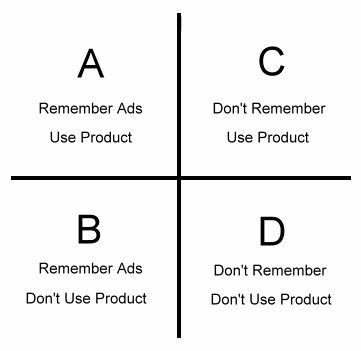
    Reeves Ad Penetration Test

    His staff phoned 1,000 people across the country at random and asked two questions:

    Are you familiar with our advertising?

    Do you use our product?

    He put the tallies into a grid much like this one.

    Please appreciate the elegant simplicity of this test.

    Some People Will Remember Your Ads

    The left side is made up of people who are familiar with your ads.

    As a percentage of the total, these people represent your MARKET PENETRATION. The higher your Market Penetration, the better your advertising is working. The lower your score, the greater potential for increased sales with a good advertising campaign.

    The top side is made up of people who buy what you have to sell.

    If ten percent of the unpenetrated group buys your product, and twenty percent of the penetrated group buys, you may subtract the first group from the second to get what Rosser Reeves called the “Usage Pull” of your advertising. Today it’s better known as the CONVERSION FACTOR.

    Sometimes, No Exposure is Better

    Thankfully, we don’t see it often, but it is possible to have a negative Conversion Factor. This is evidence that your advertising is actually harming sales. Should you find yourself in this situation, STOP YOUR ADVERTISING IMMEDIATELY and get help.

    Reeves techniques are nearly half a century old, but they still work exceptionally well. If you can find a copy, Reality In Advertising deserves a place in your marketing library.  Consider it a guidebook to go fishing for customers.

    Your Guide,
    Chuck McKay

    Marketing consultant Chuck McKayYour Fishing for Customers guide, Chuck McKay, gets people to buy more of what you sell.

    Have questions about whether your advertising is drawing customers?  Drop Chuck a note at ChuckMcKay@ChuckMcKayOnLine.com.  Or call him at 304-208-7654.

  • Trends and Cycles and Advertising In Them

    Trends and Cycles and Advertising In Them

    Trend graph.
    Trend graph.

    Originally published August 12, 2008.

    Some trends are cyclical. Some are obvious. Sometimes both. Most are also predictable.

    Are all trends cyclical? Hardly.

    In the 90s, as growing demand and sophisticated technology converged to create the Internet, providing service to local subscribers was a great growth business. Look at the incredible growth of AOL, Compuserve, and hundreds of local ISPs throughout the country.

    Today, however, Internet service is a commodity. There’s no hope of a repeat of the dramatic growth curve of the last two decades.

    Trend, yes. No cycle.

    But the housing boom of the last few years? That was an obvious trend, with an equally obvious cyclical behavior. Equity growth can’t continue at double digit rates indefinitely. By the time cab drivers and school teachers are buying second homes as investment properties, the boom is about over.

    Trend? Definitely. Cycle? Equally definite.

    We’ve seen this cycle before, haven’t we?

    We’ve seen what happens after a real estate crash. We all remember 1992.

    In each phase of each cycle, some businesses will benefit, and others will be damaged. Real estate brokers and mortgage lenders did very well during the real estate boom. They won’t be doing well in the immediate future. Bankruptcy attorneys and payday loan companies will, however.

    While the housing bubble was rising, anyone hanging out a shingle got business. Advertising? That was a totally unnecessary expense.

    Now that the bubble has burst, how many brokers have left the industry? How many have laid off their staff, and are again operating out of their homes?

    Suppose you had been the one.

    The one real estate broker in town who had realized that markets don’t go up forever. Suppose that you’d started building your image as a problem solver, as the company who can get it done, back when times were good. Who would stressed sellers turn to today to help them get their overpriced homes off the market?

    The time to build image, to create Top-Of-Mind-Awareness, is before someone needs your services.

    When times are good, people may choose you because of your reputation. They may choose you as a result of your advertising. But, sometimes, you may simply be the beneficiary of so many people in the market that you’re tripping over them.

    That was a fair description of the recent real estate market in this country. It’s about to be the description of the state of personal finance, too.

    Trend? Yup. Cyclical? Obviously. Predictable? You tell me.

    And, much like real estate brokering, and mortgage lending in the early years of this decade, do you suspect a dramatic increase in the number of bankruptcy attorneys and payday loan companies?

    Yes. It’s a safe bet (but probably a poor metaphor, huh?)

    So, what’s ahead for bankruptcy attorneys and payday loan companies? A year or so of so much business they’ll trip over it. Followed by lean times when the “market correction” has played out.

    What’s my advice?

    Don’t depend on your Yellow Pages ads.

    Oh, they’re working well right now. By the time someone is in trouble and needs your services, they’ll open the directory and search for any headline that promises them relief from their particular pain. When people open the Yellow Pages they’ve already decided to buy. But since they have no familiarity with you, and no preference for anyone, it’s a crap shoot whom they’ll buy from.

    When the onslaught of people in financial trouble diminishes (as all trends do), you’re going to have to start competing with other bankruptcy attorneys or payday loan companies for the small amount of business that’s left. You’re going to need an image in people’s minds if you expect them to pick you. You can’t build image in a directory listing.

    Start now in other media.

    Give compelling reasons that people who need your services should choose you. Start now when cash is flowing and investments in your future are less painful. Start now, because it takes time to influence the way people think, and you’ll need that time when you’re fishing for customers.

    Your Guide,
    Chuck McKay

    Marketing consultant Chuck McKayYour Fishing for Customers guide, Chuck McKay, gets people to buy more of what you sell.

    Got questions about how economic trends affect advertising? Drop Chuck a note atChuckMcKay@ChuckMcKayOnLine.com. Or call him at 304-523-0163.


  • Advertising Observations From My Hotel Room

    Advertising Observations From My Hotel Room

    Originally published February 10, 2006
    Some people when they visit a new community look for the typical “touristy” kinds of things. Others wonder if there’s a casino nearby. I study the local ads.

    This week I’ve traveled through four major southern cities. As you might expect, I have some advertising observations to share.

    Example Number One:
    Earlier this week I dropped in to visit a radio station because I’m a friend of the program director and morning disc jockey.

    While we were catching up, he played an ad for me that had a strong character espousing the client. The character was hammering away the copy points in a way that was nearly impossible to ignore.

    The client wants it re-done with a “regular announcer.”

    I told him that it was too bad that the client was intent on making the ad less attention getting and less memorable.

    Observation:
    When clients insist on making an ad sound like or look like an ad (ie. “professional”) they are effectively insisting that their ad be just like all the others.

    Estimates are that Americans ignore nearly 3,500 advertising impressions a day. Shouldn’t we be working to make our ads less like everyone elses?

    And please note that I’m not suggesting being different for the sake of difference. As the great jazz bassist and composer Charlie Mingus said “Anybody can play weird; that’s easy. What’s hard is to be as simple as Bach. Making the complicated simple, awesomely simple, that’s creativity.”

    Example Number Two:
    Ads that have attorneys screaming, “I’ll FIGHT for YOU. I’ll get you the money you deserve for your pain and suffering.” are probably running in most markets across the country. Does the same guy produce them all? They all appear to have the same script.

    Observation:
    This is transactional marketing taken to an extreme.

    Sobering thought: these ads must be producing results for the lawyers to keep running them in prime time.

    Example Number Three:
    You can’t build a positive image by piggybacking on someone else’s slogan. In a single community over the last thirty days I’ve witnessed “Got Insurance?” “Got Real Estate?” “Got Teeth?”

    Observation:
    Honestly, what do you think of these variations on “Got Milk?”

    Are you driven to do business with them?

    Do you get the feeling that these various businesses are able to solve your problems?

    Or do you suspect that they have nothing to offer, and are trying to cash in on someone else’s notoriety?

    Example Number Four:
    Why do the graphic artists who compose yellow pages ads insist on putting the client’s logo as the headline? I have the Memphis Bell South yellow pages open in front of me as I write this. I’m looking under landscaping.

    Here are the headlines.

    Bob Hollandsworth Landscape
    Complete Lawn & Landscaping Service
    Designscapes By D
    Growth Spurts Landscape And Irrigation
    Landscape Creations, Inc.
    Naturescapes
    Paradise Allscapes
    Tee Time Landscape
    Total Yards Landscaping

    Yes, I’m aware that these are the names of the businesses. That’s the point.

    Observation:
    It appears each of these companies is proud of their name. Unfortunately, as a shopper, I want to know what they can do for me. I’ll fix ‘em for making me do all the work. I’ll ignore ‘em.

    Now, among all of these easily-forgettable ads are two that hint at the ability to help me.

    When Skies Are Blue, We Rain – Blue Skies Irrigation

    From Concept To Completion, Your One-Source Solution For A Beautiful Landscape – Pugh’s Landscaping.

    Better, but I still have to think about them in order to see the advantage to me, the buyer.

    Therefore, the winner is clearly:

    Give Your Yard An Exciting New Look – Germantown Landscape Company


    At last, a clear promise of benefit. I now know what’s in it for me.

    Take a peek at your yellow pages ads. If the headline is your company’s name, you’re wasting money.

    Final Example And Observation:
    You probably shouldn’t assume that everyone knows how to find your store. “The oldest, ugliest building on Tanner Road” doesn’t mean anything to anyone who doesn’t know which section of Tanner Road to look in to find your store.

    Cleverness like this can actually cost you business. If you make shoppers solve a puzzle in order to respond to your ads, they’ll take the easy way out and file you permanently under “ignore,” which doesn’t work well when you’re fishing for customers.

    Your Guide,
    Chuck McKay

    ” href=”http://v69qtgw4rkz.c.updraftclone.com/wp-content/uploads/2006/01/Chuck.jpg”>Marketing consultant Chuck McKayYour Fishing for Customers guide, Chuck McKay, gets people to buy more of what you sell.

    Got questions about making your ads stand out and get noticed? Drop Chuck a note at ChuckMcKay@ChuckMcKayOnLine.com. Or call him at 304-523-0163.


  • Making Decisions

    Making Decisions

    Peter Drucker
    Peter Drucker
  • Danger in the Discount

    Danger in the Discount

    MP3 Player
    Generic MP3 Player

    Can you imagine a more idiotic challenge than to see which business can use up it’s investment capital and be forced out of business first?

    Its what happens each time a new business opens with no strategy other than to sell at a lower price.

    Dropping price doesn’t work. Long term, it never works. And in the short term it can’t create long term customers.

    Let’s create a hypothetical example:

    John finds a Chinese source for an 8mb off-brand MP3 player, which he can buy in quantity for $10 each. John checks eBay and finds the comparable offerings are priced at $40 each.

    Wow,” says John. “Those other sellers are being greedy. I’ll mark mine $30 each and sell a TON of ’em.” He estimates the cost of shipping, discovering it will cost roughly $6. John decides to charge $10 for shipping “and handling.”

    Thinking he will quickly sell all 100 units at $20 profit, plus a $4 shipping markup, he’s counting on taking in $2,400, and making a net profit of $1,400.

    John invests $1,000 dollars, purchases 100 players, and is now in business. He lists them on eBay for $30, plus $10 shipping and handling.

    John is right. There is a demand at that price point. He sells 16 the first day and 17 the second.

    On the third day John makes no sales. Worried, he browses eBay to figure out why.

    What’s this? This guy “Tom” has the same player listed at $27.  Worried, John drops his price to $25, and sells five more before, again, his sales abruptly stop. He finds Tom’s eBay store is still selling them at $27. Puzzled, he digs a bit deeper and discovers “Bob” now has ’em for only $22.

    John ponders. “Well, I’ve made some money on these. I think its time to get out of the MP3 player business.” He drops his price to $15, offers free shipping, and expects to blow out the remainder and retire.

    John sells 16 more before his sales again stop. He checks. Tom is reacting to the new competition by selling his players at $11 each.

    John cuts price below his cost, and offers his last 27 units at $8.50, plus free shipping. Another 19 are sold before “Andrew” offers the same player for $7.50, and free shipping.

    Tired of losing money, John contacts Tom, Bob, and Andrew, and offers his last 27 units to them for $270. None of them take him up on the offer.

    John cancels his eBay account, and determines everyone on his Christmas list will get an MP3 player for Christmas.

    Shall we calculate John’s profit on this venture?

    John's P&L

    Ouch!

    John could be considered a dabbler. A great many eBay sellers are.

    Some, on the other hand operate real businesses. Look at the feedback scores. Nobody gets to thousands of transactions as a dabbler.

    People like John are not the folks Dun & Bradstreet speak of when they report 6 out of 10 businesses with 20 employees or less don’t make it past their first year, and 9 out of 10 don’t make it to their 10th anniversary.

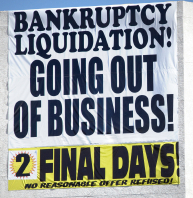
    Going Out of Business sign
    Going Out of Business

    D&B goes on to say that only 10 percent of all of the business failures in the US file for bankruptcy. The rest close voluntarily because operating their companies turn out to be way too much work for the meager income they provide.

    The biggest cause of insufficient income?

    Pricing too low.

    Why?  Because all of a new businesses operating costs are higher.

    A new businesses can’t BUY inventory at a lower price than the big box stores. It can’t ship at a lower price. And it doesn’t spend enough on advertising to buy in the bulk required to get reduced pricing there, either.

    Combine higher operating costs and lower profits with discounted pricing, and you have a situation my friend and colleague, Jeff Sexton, refers to as the “race to the bottom.”

    With lower price as your selling strategy, you’re competing with at least eight other ventures already in the process of going out of business.

    What’s the Solution?

    Raise your prices.

    C’mon, McKay,” I hear you asking.  “Just how do you suggest I raise prices in a bad economy when all of my competitors charge so little?

    Ah.  Fair question.  We’ll discuss that in a couple of days, as we continue fishing for customers.

    Your Guide,
    Chuck McKay

    Marketing consultant Chuck McKayYour Fishing for Customers guide, Chuck McKay, gets people to buy more of what you sell.

    Got questions about pricing for profit? Drop Chuck a note at ChuckMcKay@ChuckMcKayOnLine.com. Or call him at 304-523-0163.

  • A Priest, A Rabbi, And A Minister Walk Into A Bar

    A Priest, A Rabbi, And A Minister Walk Into A Bar

    Originally published December 2, 2005

    Most people are convinced that advertising is easy. Most believe that they could do a better job than the ads which inundate them daily. Perhaps they could.

    Some of them become advertising salespeople. Sadly, they are predictable. Their first predictable bright idea is to write ads using sex appeal. Their second predictable idea is usually to write ads using humor.

    So, the typical rookie radio or television salesperson staples a typical newspaper ad to a typical Broadcast Production Order form, checks the box to indicate “Spec spot” (that is, to be produced under the speculation that the customer may buy it), and under instructions to the copywriter writes “Make it funny.”

    Make it funny?

    MAKE IT FUNNY?

    Attach an eighth page listing of all the tire sizes on sale at Bob’s Tire Barn to the affor-mentioned Broadcast Production Order form, and tell the copywriter to MAKE IT FUNNY?

    “A priest, a rabbi, and a minister walk into a bar…”

    What’s the last thing the joke teller does before he starts this story? He looks to the left, and then to the right to make sure he’s not about to be overheard. What’s funny to some people is likely to be offensive to a significant number of others.

    And yet, advertisers and account executives keep telling ad writers to be funny, and ad writers keep trying to be.

    In radio or television the producer can direct the talent to inject “tones of voice” in order to cue people that something other than serious will follow. Those amusement signals are nearly impossible to do in newspapers or magazines.

    Fortunately, funny in print isn’t attempted as often as in other media. Unfortunately, about one ad in ten attempts it anyway. You’ll usually see the humor in the headline. That prevents the first line of copy from expanding and elaborating on the attention-getting headline.

    Oops.

    People can see funny faster than they can hear it, which is why we’re likely to see sight gags used in television. The major problem is the generic nature of gags. They seldom have any relevance to the product being advertised. Sight gags are bad advertising. They lead to the reason advertisers are perpetually tearing their hair out: people remembering the gag but unable to remember the product or the advertiser.

    Oops.

    Where television tends to be gag oriented, radio tends to be joke oriented, and like gags, jokes are seldom relevant. There’s no association between the set up or the punch line of the joke and the message the seller wants desperately to plant in the mind of the listener.

    The joke draws attention to itself. It draws attention away from the advertiser’s product.

    The funnier it is, the sooner it will irritate on repetition, (which assumes that it was ever funny in the first place). That’s why people say “Stop me if you’ve heard this one…”

    No joke is universally funny.

    A sizable percentage of the population won’t be amused. Trust me, the words “childish” and “stupid” come up frequently when real people critique “humorous” ads.

    Real people get confused by messages that aren’t expressed simply. Real people get offended by things that may not strike them as particularly funny. Even professional comedians tell jokes that they consider hilarious while the audience sits silently on their hands. Real people become annoyed at someone who tries to be funny, and fails.

    Oops.

    There’s a difference between humor which appeals to men, and that which appeals to women. International advertising agency J. Walter Thompson interviewed pairs of female friends in eight countries and concluded that male humor is based on competition and impressing people around them. Women use jokes to achieve intimacy and to make people feel at ease. Men prefer gags with a punch line. Women laugh at stories that relate to their everyday lives.

    Diana Coulson, director of strategic planning at J. Walter Thompson, Paris, said:

    “The key thing that emerged was that women’s main source of humor is from the everyday, the little issues, stuff they observe and that happens to them. They can find humor in a household chore, or something silly that somebody says to them at work. Men use humor in a much more competitive way. Men want to be funny to show off and to get people to admire them. It’s all about scoring points, whereas with women humor is much more a way of creating an attachment, bonding and getting intimacy with people. They are instinctively enhancing their relationships.”

    Humm. So men and women find different things funny? Who’d have thought?

    Humor can backfire. According to marketing consultant Martin Wales:

    “One laser eye surgery company was using humor in its ads, you can see them if you get redirected here. The competition capitalized on it by suggesting that there’s nothing funny about eye surgery.”

    In most major cities sizable portions of the people who live there come from other countries. Humor frequently doesn’t translate from one sub-culture to another. Instead of being funny these ads are confusing. They’re frequently offensive. Worse yet, no matter how much attention they draw, these ads seldom sell enough product. Following the “Yo Quiero Taco Bell” campaign, William J. McEwen, Author of Married to the Brand wrote in the Gallup Management Journal:

    “In a recent move that surprised relatively few industry analysts, Taco Bell announced that it was firing the advertising agency responsible for its award-winning TV commercials of the past few years. According to the company, the advertising that had built strong recognition as well as profitable merchandising opportunities for the Taco Bell Chihuahua was apparently unable to move product sales. Taco Bell sales have been reportedly flat — a situation clearly unacceptable to its management and to its stockholders..”

    Then there’s humor’s short shelf-life. You’re going to have to replace funny ads much more frequently because of the burn out factor.

    But you know the biggest reason jokes and gags fail? Their primary job is to persuade someone to purchase something from the company paying for the ad. And as we already mentioned, any attempt at communication that draws attention away from the core message is beyond stupid. When it’s your money being wasted, it’s criminal.

    The father of modern copywriting, Claude Hopkins, understood the purpose of advertising very well. In 1923 Hopkins explained:

    “Don’t lessen respect for your self or your article by any attempt at frivolity. People do not patronize a clown. There are two things about which men should not joke. One is business, one is home.”

    John Caples, author of Tested Advertising Methods, observed:

    “The two most influential books in the world have no humor in them: the Bible and the Sears Catalog!”

    Jay Conrad Levinson, author of the Guerilla Marketing series of business books said:

    “Marketing is not a stage for humor. If you use humor in your marketing, people will recall your funny joke, but not your compelling offer. If you use humor, your campaign will be funny the first and maybe the second time. After that, the humor will be grating and will hinder the very concept that makes marketing successful – repetition.”

    But, with a contrary opinion comes David Ogilvy.

    “I think this was true in Hopkins day, and I have reason to believe that it remained true until recently, but the latest wave of factor-analysis reveals that humor can now sell. This came as a great relief to me; I had always hated myself for rejecting the funny commercials submitted for my approval.

    “But I must warn you that very, very few writers can write funny commercials which ARE funny. Unless you are one of the few, don’t try.”

    Four famous advertising men with interesting, and slightly contradictory opinions. Are there facts? Surprisingly, considering how many multiple tens of millions of dollars are spent on humorous advertising, there’s precious little research done on it. At the least, every ad using humor should be tested against a serious ad to see which pulls better response.

    One such study was published in Journalism Quarterly in 1989. Bob T.W. Wu, Kenneth E. Crocker, and Martha Rogers did in a test of print ads for facial tissue and for athletic shoes. They found no difference in appeal or persuasiveness, but found “the attitude toward the ad” was higher for the humorous version than for the serious one.

    Did you catch that? People found the product no more appealing. They were not persuaded to switch brands. The only reported that they found the AD more entertaining.

    Our objective is not to entertain, it’s to sell.

    Can humor sell your product?

    Sometimes.

    Maybe.

    Most businesses should not use humor in their advertising. On the other hand, I willingly admit humor can be used quite effectively to sell product. Not jokes, but humor. A joke is only funny the first time. Humor is appreciated every time a listener hears it.

    A humorous touch can engage, and involve, the prospective customer. An ad that shows the advertiser’s sense of humor (or charm, or personality, or playfulness, or likability) frequently resonates in the hearts and minds of the public. When that happens, advertising gains credibility, and sales usually trend significantly up.

    The major problem is that at any given time there are only, what? Maybe a dozen people who can make humor work? Humorous ads are difficult to write well. It’s even harder for that well-written script to survive the treatment of producers, directors, and actors.

    What about your product, and the way it connects with the self-image of the consumer. High involvement products tend to have a longer purchase cycle. Prospective customers are more likely to search for hard facts. They won’t find those facts in a humorous ad. Unknown, expensive, or potentially embarrassing products won’t sell well with humor, either.

    Fun advertising has a much easier job selling snack foods, beers, sodas, cigarettes, movies, and music than it does in selling high ticket items. Fun advertising tends to work best with inexpensive disposable products that are themselves “fun.”

    Should you use humor in your advertising?

    Probably not. You’ll likely do far better when you stop trying to entertain and focus on offering benefits and spelling out value. (Note: I’m trying hard to talk you out of it).

    However, if you insist, here are some things that might mitigate the damage.

    • No sight gags. No jokes. Use humor to be friendly, rather than funny. When humor is subtle it’s usually more effective and suffers from less burnout than something more overt.
    • Use humor to attract customers, and make sure it doesn’t distract from the product. Use humor to reinforce and support your basic premise. Make it relevant to the product you’re selling.
    • Before you attempt humor, be sure you know your customers. Research if it’s available, personal observation always.
    • Do not use humor to attempt to deceive your customer. Humor intensifies people’s reactions. When they find you’ve not been truthful, you can expect outright hostility.
    • Don’t over-analyze humor. It’s either funny or it’s not. The best humor comes from the edge, where it can easily be offensive.
    • At the same time, don’t rush your first idea into the marketplace. Sleep on it.
    • Be thought provoking. Engage your customers’ imaginations. Let your customer experience “getting it.”
    • Be careful not to let prospective customers see themselves as the butt of your joke. Vonage’s “People do stupid things” campaign wouldn’t work as “You do stupid things.”
    • Use humor about situations, not people. Whoever they are and wherever they come from, people will usually identify with a situation.

    And above all, never lose sight of your purpose in advertising. Your purpose isn’t entertainment. Your purpose is to sell the product. Will humor motivate people to buy? Then do it. If it won’t, then don’t use it when you’re fishing for customers.

    Your Guide,
    Chuck McKay

    Marketing consultant Chuck McKayYour Fishing for Customers guide, Chuck McKay, gets people to buy more of what you sell.


    Got questions about writing ad copy, with or without humor? Call Chuck at 304-523-0163. Or “E” him at ChuckMcKay@ChuckMcKayOnLine.com.