Blog

  • The Soccer Mom Myth

    Have you ever wondered what would happen if you put two experts on your favorite topic together and let them discuss the topic? Would you have Robert Allen and Carlton Sheets exploring nothing down techniques? Or would you prefer Milton Friedman and Steven D. Levitt hashing out the social repercussions of school vouchers?

    Me? I’d have Holly Buchanan and Michele Miller talk about marketing to women.

    Michele’s Wonderbranding and Holly’s Marketing to Women Online are required reading on the subject. They’ve been sharing the stage in speaking engagements for a couple of years. I’ve been looking forward to their co-authored book, The Soccer Mom Myth, for most of the last year. Its been worth the wait.

    Buchanan and Miller use examples we’ve all observed in real life to illustrate their points. They tell a story, for example, of a disagreement between their friend Heather and Heather’s financé. “From his perspective, the argument was not a big deal. In his male communication style, conflict is a normal part of how couples communicate. Heather, in her more female communication style, came away with a totally different interpretation of the argument. She looked at it as a breakup of the relationship.

    Then they apply this observation to business: “Believe it or not, this same scene plays out with companies and brands, not just fiancés. She has a bad experience with your company or product. You think, “It was just a customer service call, she couldn’t get her questions answered and had to wait ten minutes to get a live person, that’s just a blip.” But to her, it’s a relationship ender. What to you may seem like small things can be huge to her.

    Men and women communicate differently. No surprise there. But Buchanan and Miller note that there are times when one gender’s communication style is actually more effective with all customers. (Think men’s instructions and naming preferences with women’s categorization and navigation). By picking and choosing between gender specific tendencies, both genders will have a better shopping experience.

    And thats a critical point The Soccer Mom Myth makes: improving the purchasing experience for women automatically makes the experience better for men, as well.

    There are companies who are thinking they should market to women. This book will help them make giant strides in that direction.

    Other companies recognize that the phrase “marketing to women” is already redundant. They simply call what they do “marketing.” The Soccer Mom Myth will help them refine their technique and establish a major head start over their competitors.

    The Soccer Mom Myth, $19.95, 232 page hardcover, ships March 10. This book should be a part of every marketer’s library.


    Chuck McKay is a marketing consultant who works with professional practices and owner operated businesses. Questions about marketing to women may be directed to ChuckMcKay@ChuckMcKayOnLine.com.

  • If Stephen King Wrote Advertising Copy

    Last month a new Stephen King book was published by Charles Scribner’s Sons. It’s called Duma Key: A Novel.

    Duma Key: A Novel is the story of Edgar Freemantle and his recovery from the terrible nightmare-inducing accident that stole his arm and ended his marriage.

    Care to predict whether this will be a profitable book?

    But wait… it’s 592 pages long.

    Do Stephen King fans find hundreds of pages intimidating?

    It appears not. 50 of his novels have reached bestseller status. Enough fans buy his books to make his net worth over $200,000,000.

    And yet, its a safe bet that someone in his past said “This is too long. Nobody will read this many pages.

    Obviously, people who enjoy King aren’t concerned with the word count. And (critical point here) the opinions of non-fans DON’T MATTER.

    So, what’s the marketing parallel?

    People who aren’t in the market for what you sell don’t get an opinion in how long your advertising copy should be.

    ‘Nuff said.


    Chuck McKay is a marketing consultant who works with professional practices and owner operated businesses. Questions about optimal copy length may be directed to ChuckMcKay@ChuckMcKayOnLine.com.

  • Video Production Lessons From Ron Popeil

    Ron Popeil is the absolute master of selling on television. Can anyone else claim to have sold over two billion dollars worth of products? He recently sold over 7,900 Showtime RotesseriesTM in a single hour on QVC at $127 each.

    You do the math.

    Popeil did the basics better than anyone.

    Basics? Yes. There are only four.

    Popeil’s Basic Number One: The words you use are critical.

    Ron learned his craft pitching knives and kitchen gadgets on Maxwell Street’s open air markets in Chicago. The concept is simple. If he was persuasive, people bought. If not, they didn’t.

    Study his presentations and you’ll notice two things consistently. Popeil’s catch phrases (“Set it and forget it.” “But wait, there’s more!” “It slices. It dices.”) get said again, and again, and his use of rhetorical questions gets the audience involved. “Isn’t this amazing?

    By working in front of real people and dealing with their questions, he learned to anticipate common objections and build the answers to common questions into his presentation.

    As important as the pitch was, he never scripted his famous TV ads. “If I’ve been chopping away for 10 hours a day, giving the same pitch over and over again, refining it a little bit each time, why would I need a script?

    Popeil’s Basic Number Two: Noting is more important than the product.

    When Michael Jordan pitches Haines, Michael is the star. When Ron Popeil pitched the Showtime Rotisserie, the broadcast opened with a series of shots of meat and poultry roasted to perfection and rotating in the Showtime. The offstage announcer described a “mouthwatering pork-loin roast,” or a “delicious six-pound chicken.”

    Not until our interests and our appetites were whetted, does Popeil even enter the stage. Watch any of his infomercials. You don’t see much of Popeil, but you see the product solving problems and making life easier for consumers.

    Popeil’s Basic Number Three: Show, don’t just tell.

    Ron Popeil never simply told us what the Veg-O-Matic would do. He showed us.

    He showed how easily the product worked and how quickly it got results. There were no complicated settings, no buttons to press, no hidden gears, just a simple device that worked flawlessly each time.

    Through close ups we saw an onion sliced into uniform thicknesses with one motion, whole tomatoes sliced with every seed in place, a whole can of Spam sliced at once. He showed us how to turn the dial to make thin slices of cheese.

    Popeil also showed us the effect his products had on other people. He used to stand at the enterance and asked each member of the audience if they’d had a big breakfast. He wanted all of the hungry members in front when the food came out.

    Popeil’s Basic Number Four: You can’t fake passion.

    If you’re genuinely thrilled with the product you’re selling, selling it becomes the easy part. If you’re not excited about your offer, its time to find a new offer. Or a new career.

    Popeil’s autobiography, Salesman of the Century, has fallen out of favor, which is a good thing if you’ve never read it. Pick up a cheap copy and let the man tell you in his own words how to do what he does.


    Chuck McKay is a marketing consultant who works with professional practices and owner operated businesses. Questions about producing effective television advertisements may be directed to ChuckMcKay@ChuckMcKayOnLine.com.

  • Songwriters, Copywriters, and Income Taxes

    Kenny Rogers has said he sings songs that men wish they could sing to their women, and that women want to hear from their men.

    Songwriters understand that.

    A number of years ago I audited a UCLA Extension songwriting class from my friend, Grammy nominee Barry Kaye. Barry made a point during a song critique that I’ve never forgotten: people identify with songs and singers. No singer will ever sing a song that paints the protagonist as a wimp. Even more importantly, no listener will identify with such a character.

    His advice to aspiring songwriters? Never write a song that doesn’t make the singer an admirable character.

    An advertising lesson.

    As you may suspect, aspiring advertising copywriters can learn from Barry’s comment. Never write an ad that doesn’t make your purchaser an admirable character.

    In general, I like the H&R Block “I’ve got people” campaign (“I can deduct my gauplattlerhosen?”), but right now there is no way I’d buy that particular software package. I’ve been soured by the advertising.

    The ad opens with a man sitting in front of his computer as his wife enters the picture.

    She: “Hey, how’s taxes?

    He, quite sheepishly: “I’m stuck.

    She: “Stuck, huh? Humm. Maybe you should get some people to help us.

    She becomes sarcastic. “Oh, that’s right. We didn’t use people. We used a box.

    Then, like a mommy driving home a point to a naughty child, she holds the box in front of him and says, “Well, maybe you should tell the box you’re stuck.

    He, cowering: “I’m stuck.

    The announcer then ties the software to the “I’ve got people” campaign: “Tax cut from H&R Block is the only tax program that gives you direct access to H&R Block professionals.

    Before learning about the national tax experts bbb. I have in the past acquired tax software packages and calculated my own return. If I didn’t already have a relationship with an amazing accountant, I might consider purchasing H&R Block’s software.

    At least, I might have before I saw this ad.

    And as we get closer to tax time and it airs more frequently I’m finding that it’s grating on me. First, I’m annoyed by the wife. Second, I’m even more annoyed by the husband who allows himself to be scolded as if he were a 3 year old caught raiding the cookie jar. By extension, I’ve become negative on the product.

    Am I the target?

    Perhaps I’m not a member of the audience this ad is designed to persuade, and my opinion is not relevant. And, whether it is or not, you should never let one person’s reaction to any ad influence your decision to run it.

    But I suspect that my reaction to the characters in that ad may be a common one.

    Be careful how you portray the people who may buy what you’ve got for sale. As Barry Kaye pointed out, nobody identifies with a loser.


    Chuck McKay is a marketing consultant who works with professional practices and owner operated businesses. Questions about writing effective advertising copy may be directed to ChuckMcKay@ChuckMcKayOnLine.com.

  • Going For The Gold

    There’s something to be said for experience. For that matter, there’s something to be said for age.

    There comes a time for most of us in which we realize that we’ve already considered the current topic. We realize that we’ve come to some conclusions. We realize that there’s no new evidence to change our conclusions.

    I think this is why older people are considered by younger people to be so set in their ways.

    The older people have already considered whether a particular behavior is supportive or enabling. They’ve already determined that shorter-term investments come with higher volatility than longer-term investments. They’ve already determined that bad advertising concepts can’t be saved by creativity.

    And I, it appears, have become one of those crotchety old advertising people.

    I’m no longer willing to give the benefit of the doubt to lame ideas that, although they won’t go away, have never proven to be of value to any company, anywhere.

    Like this one: “The Olympics, the political conventions, the elections, leap day, the landing on Mars and some exciting anniversaries give advertisers lots of potential themes in 2008.

    The author goes on to list such door-busting themes as:

    Feb. 18: Presidents’ Day
    May 25: Indianapolis 500.
    Aug. 8-24: The 2008 Summer Olympics in Beijing, China.

    I won’t be reserving judgment on this one. These are bad ideas.

    But the sad point of this list? Somebody will attempt to use these.

    Some office supply store will offer a “200 Meter Freestyle” printer ink discount. Some family restaurant will offer a “Team America” platter. Some car dealer will hold a “Gold, Silver, or Bronze” sale.

    By association, these people may get some weak attention.

    Maybe.

    Regardless, its dangerous to assume that people interested in the original event have any interest in what you have to offer. And if they do, they need to associate you as the solution to the problem they’re trying to solve.

  • What’s your positioning statement? “We know that you’re interested in the Olympics. Unfortunately, we’re not them.
  • And the shelf life of these ads is, at best, only days. Once the event is finished, so is the entire budget you’ve spent on it.
  • Then there’s the problem of trying to get your ad to cut through the clutter of all of those other companies doing Gold, Silver, and Bronze sales.
  • Conclusion: Don’t waste your money trying to piggyback on someone else’s theme. Invest your money, instead, in getting your unique message into the minds of people who are interested in what you offer.


    Chuck McKay is a marketing consultant who works with professional practices and owner operated businesses. Questions about advertising themes may be directed to ChuckMcKay@ChuckMcKayOnLine.com.

  • Pencils Down.

    For two months now the Writers Guild of America has been on strike against the Alliance of Motion Picture and Television Producers. Have you noticed, yet?

    Most of the television drama is produced months before it’s aired, so no significant changes in drama.

    “Reality” programming such as Survivor, American Idol, American’s Next Top Model, or Celebrity Apprentice doesn’t use written scripts (so they say), which means no problem there.

    It appears that the only programs showing any immediate effect of the writer’s strike are the daily comedy shows – such as those hosted by Jay Leno, David Letterman, John Stewart, Stephen Colbert, Conan O’Brien, and Craig Ferguson.

    The writers seem determined to continue their strike.

    The networks are rumored to already be considering programs produced in other countries. (BBC anyone?).

    The producers are betting that Americans don’t care enough about quality to affect their viewing habits. If they’re right, the nation will watch whatever is put before them. If they’re wrong, there are always writers in other countries. (Did we mention the BBC?)

    The writers are betting the opposite – that people will angrily demand better programming.

    They’re both wrong.

    While the writers and producers play chicken with the prime time lineup, they’re all missing a major point.

    Today’s younger audience considers TV to be just another option on a much bigger menu. These viewers are much less likely than their parents to watch programs which are only marginally interesting to them.

    If viewers don’t care for Letterman, Stewart, or Colbert (who have all returned to the air without writers), then YouTube or World of Warcraft are only a mouse click away.

    And, as advertisers, we should always be thinking about advertising where the viewers are.


    Chuck McKay is a marketing consultant who works with professional practices and owner operated businesses. Questions about the the future of television advertising may be directed to ChuckMcKay@ChuckMcKayOnLine.com.

  • Spend Less Time at Work to Make Your Advertising More Effective

    You overhear an employee say to a customer, “I’ll have to check with my manager.” Quick… what’s the word-of-mouth going to be about this business? Too early to tell? We know too little to decide? Perhaps. I can assure you that its at least one step removed from “When I had a problem they took care of me.”

    And no matter how many ads you run proclaiming the value of your customer service, people’s real experiences keep running into “That’s not how we do it,” or “I’ll have to check.”

    Neither is a strong reaffirmation of your advertising.

    According to Rich Dad, Poor Dad’s Robert Kiyosaki, as an employee you have a job. When you start selling your own services (or products) you own the job. But until you develop a system that lets other people do the work for you, you don’t yet have a business.

    In Designing the Company for Your Vacation, I recommended that you work out the best way to handle the responsibilities of each job, standardize the procedures, and codify them. This works well as you’re building the company.

    It also limits your company’s ability to adapt as customers expectations of service change. And that’s a constantly moving target.

    Its a control issue.

    Some owners can’t let go. Their authoritarian management style sends a message to employees: “You may do whatever is necessary to solve the problem, provided that you do exactly as I would do.”

    As you built the company you were the motivating force. Now, you’re the limiting factor. Until you can step away from the day-to-day operation you’ve limited your company’s growth as well as your ability to cash out the equity in your company.

    So, in addition to teaching your employees to do their jobs as you would do them, you must also give them the authority to do their jobs as they would do them.

    Risky? Yes. It involves sharing the dream with your employees, and letting them help you to make it real. It requires relinquishing control. Until “empowerment,” became the buzz word, this was called delegation.

    Successful delegation requires that you:

    • Define expectations, and focus on results. Be very clear about standards and how results will be measured (viz., through the employee time tracker app). You don’t need to be concerned with all of the steps your employees take to achieve those results.
    • Turn them lose to do the job. Once you’re convinced they know what’s to be done, the deadlines, and the results you expect, get out of their way.
    • Give your employees the authority to complete the job, and hold them accountable for the outcome.

    We opened with an example of an employee having to check with a manager. If the employee had simply said “Yes, we can fix that for you,” what would that customer, and the others who overheard this conversation, think?

    Whether you call it delegation or empowerment, employees who can successfully run the business when you’re not there make your company worth more, and your advertising more effective.

    Some managers have given employees the authority to resolve any problem that will satisfy the customer and cost the company less than $25. Interestingly, employees seldom go to the limit. Managers are frequently chagrined to find that empowered employees cost the company less than the managers do when it comes to customer satisfaction.


    If you want to improve your sales in business, read Sellers Playbook.

    Chuck McKay is a marketing consultant who works with professional practices and owner operated businesses. Questions about the effect of customer service on advertising may be directed to ChuckMcKay@ChuckMcKayOnLine.com.

  • Designing the Company for Your Vacation

    A long-term client called last week to brainstorm his next business venture. We talked about how to structure the business, and I suggested that he outsource as many of the operational functions as possible.

    He fought the idea. Said it didn’t give him enough control.

    So I asked, “Are you trying to build a company, or to change jobs? Because it appears that you’re designing a company which will require your presence.

    Isn’t that the worst thing about self-employment? When you go on vacation, the office shuts down.

    That’s not owning the business. That’s being the business.

    Here’s a simple way to plan your organization.

    Draw the plan to show now how things will run when the company is fully developed. Show the President, both VP’s, the Marketing Director, the Personnel Director, Sales Manager, and line level employees. Put your own name in every blank (assuming that you’re the only employee).

    Now, starting at the bottom of the chart, at the customer contact level, write an operations manual for one of those jobs. Detail exactly how you want the job (and the customer) handled. Hire someone to fill that job, and put her name in the box.


    Follow this procedure with every job in the chart, removing your own name as you hire and train your replacement for that particular responsibility.

    When the only place your name remains is at the top, you’ve built a company which can survive your vacation. Now you can start implementing your exit plan.

    You do have an exit plan, don’t you?

    We’ll discuss that strategy next time.


    Chuck McKay is a marketing consultant who works with professional practices and owner operated businesses. Questions about competitive organization of your company may be directed to ChuckMcKay@ChuckMcKayOnLine.com.
  • Why Do We Pursue Publicity?

    Publicity. Securing public notice or attention. The act of getting people to talk about us.

    We pursue publicity because it has an interesting ramification – increased sales. The more people know about you, the more likely they are to buy whatever you’re selling.

    Publicity and its sibling, word-of-mouth, have more credibility than does, say, advertising, for a simple reason. What other people say about you is more believable than what you say about yourself.

    Can you buy publicity? On occasion, yes. Usually, no.

    But publicity is freely available to those who with unfettered imaginations are paying close attention to everything around them.

    When you’re prepared, publicity opportunities are limitless.

    Some of us only want notoriety.

    CEO of Virgin Atlantic, Richard Branson, indirectly draws attention to his airlines each time he makes another attempt to circumnavigate the globe in a balloon. Very few people care if he actually sets a new record – the attempt itself is newsworthy. Branson has made four attempts so far.

    Then there’s the publicity stunt.

    One of P.T. Barnum’s homes was right next to the main line of the New York and New Haven Railroad. Barnum hired a man to pay close attention to the railroad timetable, and have an elephant pulling a plow each time a passenger train was due to pass by. Reporters from all of the New York papers wrote stories about Barnum’s elephant, which boosted attendance at his New York museum of curiosities.

    Some of us are victims of exaggeration, gossip, or outright lies.

    In a 1969 Toronto concert someone threw a live chicken on the stage where Alice Cooper was performing. Not realizing that chickens don’t fly, Cooper picked up the bird and threw it back into the orchestra pit, where it was inadvertently stomped to death by the audience. By the next morning the story had grown to front page status in the Toronto Star, where it was picked up by most other daily newspapers.

    Frank Zappa called Cooper to ask if what he was reading was true – that Cooper had bit the head off the chicken and drank its blood. When Cooper denied the story, Zappa reportedly said “Whatever you do, don’t tell anyone it isn’t true.” Zappa considered any front page publicity priceless.

    Some of us invent the stories being told about us.

    When other managers might have issued a press release announcing their artist’s planned performance tour, Andrew Oldham called a press conference to to announce the Stone’s pending lawsuit against twelve U.S. hotels which had refused to book rooms to the Rolling Stones for their 1966 tour. Weeks later when reporters finally started asking which hotels were defendants, Oldham became unavailable for interviews.

    When Mohammed Ali was still Cassius Clay, a free-lance magazine photographer was dispatched to Louisville to shoot some pictures of the champ working out. Ali asked which other magazines the photog worked for, and was told Life. He then asked the photographer’s hobbies. Learning underwater photography topped the list, he mentioned “I train under water,” and explained that the resistance of the water provided a superior workout. The resulting Life photo layout made Ali’s underwater training regimen legitimate, even though it was a story he’d invented on the spot.

    And sometimes creating those stories backfires.

    On November 23, 2007, Ingrid Marie Rivera, the reigning Miss Puerto Rico, claimed that someone had laced her clothing and her makeup with pepper spray in an attempt to force her out of the Miss Universe competition. By the end of the week the pageant organizers announced that forensic tests showed no traces of contaminants and were demanding an explanation.

    Some of us see relationships.

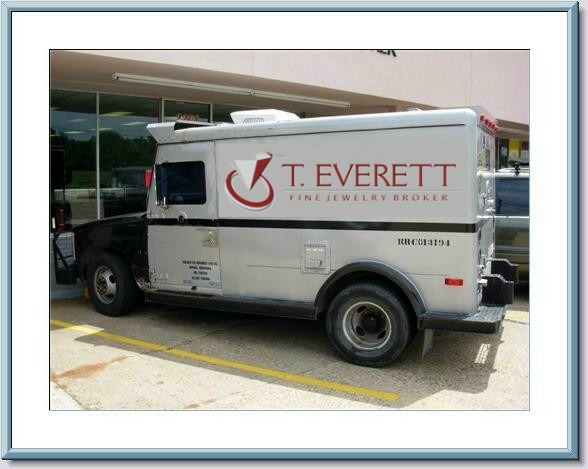
    Bossier City Jeweler, Todd Everett, deals with people’s valuables. He tapped into their collective visual memory and purchased an armored car to promote his store. People all over Shreveport and Bossier City know how to find T. Everett, Fine Jewelry Broker. He’s on Benton Road. Just look for the armored car.

    Some of us just like being admired.

    At the turn of the last century the ultra rich John D. Rockefeller and Andrew Carnegie made generous cash gifts to communities in which they wished to be well thought of.

    Carnegie gave his money to libraries, schools, and universities throughout the United States, Canada, and the United Kingdom. How many Carnegie Libraries are there?

    Rockefeller used his fortune to create the modern concept of targeted philanthropy, supporting medicine, education, and medical and scientific research. In case the schools weren’t enough, the world’s richest man is remembered for passing out dimes to children everywhere he went for the last several years of his life.

    Then there’s Vess Barnes.

    When Wizard Academy founder Roy Williams was told by Amarallo, Texas jeweler Vess Barnes “You really need to pave this driveway” for the umpteenth time, Roy volunteered Ves to pay for it. Vess wrote the check, and didn’t get anything for his generosity other than a few mentions like this.

    Publicity isn’t advertising.

    It is marketing, however. Publicity is marketing in one of its most powerful forms. In terms of creating top-of-mind awareness it can be priceless.

    What are your publicity opportunities? Will you have the courage to pursue them?

    Do you have your own publicity triumphs? Hit the “comment” button and share with the rest of us.


    Chuck McKay is a marketing consultant who works with professional practices and owner operated businesses. Questions about using publicity to boost sales may be directed to ChuckMcKay@ChuckMcKayOnLine.com.

  • What’s Your Specialty?


    I have a friend who’s very talented. He’s an accomplished musician, writer, and marketer. He owns and operates three profitable businesses which he grew from scratch.

    And yet, when people are looking to hire help in any of these areas, he’s frequently passed over. He isn’t the first choice when people want to hire a performer, or a composer, or a consultant.

    Care to speculate why?

    While you’re pondering that, consider this: Proctor & Gamble manufactures detergents. They make Tide, and Gain, and Ivory, Era, Dreft, and Cheer.

    Are there significant differences between these products?

    Yes.

    Yes, there are. But by far the biggest differences are in their marketing.

    Each is marketed to a different group of consumers as a solution to their specific concern. Tide gets clothes clean. Ivory provides a gentle and pure clean. Gain makes your clothes smell clean. Dreft leaves clothes soft. Era is tough on stains. Cheer has color guard.

    Why not an all-purpose laundry detergent?

    Why doesn’t Proctor & Gamble make one detergent which gets clothes clean, makes them smell clean, leaves them soft, is tough on stains, and guards against fading and color transfer?

    Because it wouldn’t sell.

    Think about it. Would you choose an “our product does everything” detergent if your biggest issue was stain removal? Or would you choose a product designed for stain treatment? If your biggest issue was stains, would you choose a product that left clothes soft? Or one that smelled better?

    No. You’d buy a product that you believed would solve your problem. You’d “hire” a specialist.

    Why don’t companies specialize?

    The biggest fear people have about specialization is all of the business they believe they’ll be passing up. When they declare themselves a specialist in left-handed widgets, they’ll miss out on the right-handed widget jobs. Guess what? They won’t get the work by not declaring a specialty, either. Those jobs will be snagged by the right-handed widget specialist.

    Tide gets clothes clean. Specialists make more money.

    I can hear you right now saying, “But I don’t manufacture detergent.” It doesn’t matter. Whatever you do, you’ll do better as a specialist.

    Jermaine doesn’t sell music instruction.

    Have you ever heard of Jermaine Griggs? He’s a 25-year-old musician. In 2000 (when he was 17 years old), he formed a company, Hear and Play, to sell music instruction.

    How many music instruction courses are there? Dozens? Hundreds? Thousands?

    Probably.

    Yet, Jermaine’s company, Hear and Play, grosses over a million dollars a year.

    How narrow should your specialty be?

  • Jermaine doesn’t sell music instruction.
  • He doesn’t sell piano instruction.
  • He doesn’t sell Gospel piano instruction.
  • He sells books and videos that teach you how to play Gospel piano BY EAR.
  • Can you get much more specialized than “learn to play Gospel piano by ear?”

    Specialists make more money.

    Don’t be an accountant. Be an accountant that understands the specialized needs of the hospitality industry. Don’t be a travel agent. Be a travel agent who specializes in honeymoon trips to Cancun. Don’t be a mechanic. Be a mechanic who only works on BMWs.

    What should your specialty be?

    There are three questions you must answer yourself.

    1.What are your passions? What would you do for free because you enjoy it so much?

    2.Can you make a living doing what you love? Is there enough of a market to support you?

    3.Can you articulate in a single declarative sentence what it is you do?

    Tide gets clothes clean.

    Jermaine helps you learn to play Gospel piano by ear.

    When it absolutely, positively has to be there overnight.

    Ban won’t wear off as the day wears on.

    Have it your way.

    A simple declarative sentence that sums up what you do.

    Answer those three questions, and take the plunge. What’s your specialty going to be?