Author: Chuck

  • The Second Biggest Mistake in Customer Acquisition – (the Strawberry Jam Theory)

    The Second Biggest Mistake in Customer Acquisition – (the Strawberry Jam Theory)

    [et_pb_section admin_label=”section”]
    [et_pb_row admin_label=”row”]
    [et_pb_column type=”4_4″][et_pb_text admin_label=”Text”]

    It Wasn’t Really a Question

    What my new acquaintance actually said was, “I know it takes money to make money, but promoting my business doesn’t feel like investing, and I can’t afford too many more bad rolls of the dice.”

    The implied question was, “What should I spend on marketing?”

    What Does it Cost to Acquire a Customer?

    The concept is simple, but the answer isn’t, mainly because it costs less to attract shoppers who are physically close to your business than those farther away.

    The easiest way to explain this may be with jam, and toast.

    Pretend Your Marketing Budget is One Tablespoon of Strawberry Jam

    toast and jamSpread over half a slice it covers the bread with a thick, generous coating of strawberry goodness that’s evident with every bite.

    On Two Slices of Toast it Starts Getting Thin

    And if you wanted to spread our delicious strawberry jam over seven and a half slices of toast, well, the result will be disappointing every time.

    There’s just not enough jam for a satisfying coverage of that much toast.

    Strawberry Jam in the Real World

    Whether you’re an esthetician, an attorney, or run a smoke shop; whether you weave custom rugs, or fit custom toupees, the concept works exactly the same way as jam on toast.

    Today, let’s consider an HVAC (heating and air) contractor in Rancho Cucamonga, California.

    • Half a slice of toast in this case would equal all of the homes within half a mile of the shop – 2,132 households.
    • One slice (one mile) includes 5,002 homes.
    • At a two mile radius from the shop that number of households jumps to 20,268.
    • At five miles the number of households has grown to 74,804.
    • And within a 7.5 mile radius the household total has reached 146,585.

    How Do We Reach All Those Homes?

    We’re going to rely on one of the oldest forms of traditional media: direct mail. We’ll send a postcard to all of the homes around our shop promising heat when it’s cold, cool when it’s hot, and lightning fast emergency service.

    What’s Our Budget?

    For illustration, let’s say our tablespoon of jam would let us deliver postcards to 150,000 homes.

    Hey, that’s great news! Everyone gets a postcard…

    …But No One Gets a Real Taste

    One tablespoon of jam spread across seven and a half slices of toast doesn’t provide any flavor. Worse yet, the jam arrived before the bread finished toasting.

    You see, most homeowners don’t think about hiring a heating and air contractor when their system is working. They don’t even think about heating or air until their system breaks down and, with a loud kerchunk, the toast pops up.

    If we send our mailing out in April we have to hope it arrives just as someone’s heating or air conditioning system fails. We also have to hope they become very uncomfortable very quickly. Because if they don’t have any issues until July they’ll never remember we offered jam when there was no toast.

    That tiny morsel of April sweetness was effectively gone before anyone bit into it.

    The Solution? Less Toast

    5,002 postcards, one sent to every home within a mile of our business, will leave enough budget to print and send 144,998 more cards.

    What do we do with them? Simple. We send them to the same 5,002 homes a couple of weeks later.

    And again ten days or so after that.

    In fact, our budget will permit us to reach those homes 30 times over the next 12 months.

    Why only 5,002 Homes?

    Those other households are simply too far away for cost-effective reach.

    We could try to reach 146,585 households once each. Mathematically, in a single contact, we’re likely to convince them only 3 percent of the way to picking up the phone and calling for help.

    But with 30 ongoing reminders we could instead reach 5,002 homes 100 percent of the way to becoming customers. (And when I show you how to get the Postal Service to deliver those cards for as little as 18 cents each? Oh, my. Life does get sweet!)

    When you understand how to send your marketing dollars out into the world, and have them bring several friends when they come back home, you get to decide your own growth rate.

    How high do you want your company to fly? How fast do you choose to get there?

    Assume the Variables

    It will become obvious that building a brand that customers think of when they need what you sell requires a different strategy than asking for that sale right now.

    You need to budget differently to build that brand, too. And regardless of which strategy you choose, you’ll need to “right size” your company’s marketing budget so that every dollar contributes to maximum impact.

    Can you afford anything less when you’re fishing for customers?

    Your Guide,
    Chuck McKay

    Your Fishing for Customers guide, Chuck McKay, gets people to buy more of what you sell.

    Wondering how often to make an offer to a potential customer? Drop Chuck a note at ChuckMcKay@ChuckMcKayOnLine.com. Or call him at 307-207-0028.

    [/et_pb_text][/et_pb_column]
    [/et_pb_row]
    [/et_pb_section]

  • Stuffing the Golden Goose

    Stuffing the Golden Goose


    A number of years ago the late Fred Murr asked me, “How old do you want to be when you retire?

    I said, “I don’t know. Seventy five, maybe?

    He asked, “Are you serious?

    I said, “Fred people retire and they DIE!

    Exit Strategy

    I love my job. I’m going to keep on doing it forever. Well, I don’t intend to stick with the job until I die. But I do intend to do it for a long time because I’m enjoying what I do.

    But we all need to create an exit strategy from the companies we own and operate for a couple of reasons. One of them is the bulk of our wealth may be tied up in equity in that company, and its going to be very difficult to retire without taking it with you.

    So, let’s talk for a little bit about what you need in an exit strategy.

    When Will You Sell, and for How Much?

    You’re going to need two numbers. The first is, you need to know how much to sell your company for. And the second is you need to know when you’re going to do that. So, you need an amount and a timetable. And once you have that any good marketing consultant can help you get there.

    What’s the amount? It’s a sum big enough that you could invest it, live on the interest, and never touch the principal. There are a few other strategies, too, but that one’s my favorite.

    If you’re going to be retiring by selling your company, the first thing we need to do is determine out how much money you need to retire on. And the second thing we need to figure is will your company sell for that amount.

    For most of us that answer is “no,” and we’re going to have to grow the company to create enough wealth to sell the company and be able to spend the rest of our time with the grandkids, or pass the company along to the kids, or sell that company to a total stranger for cash, or help the employees to buy out your interest in the company. But one way or the other you need to plan your exit from the company.

    I don’t care if you just started your business yesterday, or if you’ve been doing it for 30 years. Trust me, you need to plan what’s going to happen when you no longer choose to come to work everyday.

    What Do Buyers Want?

    Investors who might be interested in your company are looking for three things:

    1. Operational Excellence
    2. Consistent Growth (with no surprises)
    3. Predictable Cash Flow


    The first thing in determining your selling price is to figure out exactly how much you’re going to need. And whether you take it as a salary, or owner distributions, or investor dividends, you’ll have to replace that much money.

    I’ve prepared a step-by-step booklet called Stuffing the Golden Goose. Download your FREE copy. It will help you to figure out exactly how much you’re going to need to fund your retirement, and what you need to sell the company for to be left with that much. It’s straightforward and the steps are quite simple.

    Case Study – Beckley Imports

    Steve Beckley, owner and operator of Beckley Imports, Des Moines, IA.

    Let me tell you about my client and friend, Steve Beckley. He called me some time ago. He’d participated in a group call that I was hosting and said, “Chuck, can you hang on the line when everybody else hangs up?” I did. He said, “I need your help. I need to create another million dollars in top line sales in order for me to sell this company in three years.”

    I said, “I’m flattered that you think I can help you with that, but you’ve caught me at a time when I’m maxed out on the time I have available. I can’t help you now.” He called back the next month. And the month after that. Until finally I said, “Steve, my schedule has just opened up.”

    I flew to Des Moines where Steve Beckley owns and operates Beckley Imports.

    At the age of 22 Steve Beckley was the Service Manager of the local Mercedes dealer. He quit. He opened his own shop. A single bay.  He worked on import automobiles. Steve’s belief was that people who paid a lot of money for a precision automobile would be willing to pay a little bit more to keep it operating at peak efficiency. And he was proven right.

    They kept on growing. He now has a state-of-the-art, 15-bay facility in Des Moines.

    Starting the Research

    I joined him there. We spent three days digging through how his operation works. Where do customers come from? How long do they stay? Where do they go? Which ones are very valuable? Which ones are not? We mystery shopped his competitors.

    I said, “Steve, I love the postcard campaign you’re using to draw customers in. The only suggestion I have is they all say the same thing – ‘Dear Import Auto Owner.’ I promise you somebody that drives a BMW does not consider himself an import auto owner. He considers himself a BMW driver. Anybody who’s got a Rolls Royce doesn’t consider himself an import automobile owner.”

    We redid those postcards so that the Saab owner got one that said, “Dear Saab Owner.” And the Mercedes owner got one that said, “Dear Mercedes Owner.”

    One of the things I loved about working with Steve is he implements! I gave him that recommendation on the 10th of February, and by March he had the new postcards out. He called me about the 7th of April and said, “Chuck, we’ve just had our best month in the history of the company. We are $50,000 above where we predicted we’d be for the month.

    Then in April we were up about $50,000. In May we were up about $50,000. If you annualize that (and I quickly did) we were $600,000 on our way to that million he needed.

    I looked at it and said, “Steve, you’ve got one customer leaving out the back door for every two you’ve got coming in the front door. What’s happening?

    He said, “Well, some people sell the car and don’t need us any more. Some trade it in on a new one and now they’re covered under the factory warranty. Some of them leave the community or they die. But, you’re right. That is an awfully high turnover.

    So, we studied the operation, we came up with a customer retention program, and cut the attrition to about half.

    Well, now we’re getting very close to that million a year, and it hasn’t been a year yet.

    Owning an Asset, Not a Job

    Steve decided the next thing he must do is take himself out of the picture because nobody wants to buy a job. They want to buy a company that is functioning well without outside supervision. So, he hired a manager. A very good manager. And that manager did things so well that the staff started saying, “Steve, do you think you could go home? You’re getting in the way.

    Steve took his mother to Turkey because she’d always wanted to see it.

    The he visited an orphanage in Africa that he’d been supporting for a few years. He brought his tools this time and spent the next two months fixing and tuning up every Range Rover automobile they had. That was the only brand they bought.

    When he got back to America a couple of his buddies said, “Get your bike out.” They rode their Harleys from Des Moines to Seattle and back. They stopped at some national parks along the way.

    Then he called me. And he said, “Chuck, I’ve decided not to sell.” I asked “Why is that?” “Because I’m now making more money than I’ve ever made in my life, and I don’t have to go to work any more.

    Revising the Exit Strategy

    Steve has hit on something really important.

    The exact attributes that make your company attractive to a buyer also make it a great company to own and operate.

    If you don’t have an exit plan, it’s time to start one. You need to run through the material in the Stuffing the Golden Goose booklet to calculate how much money you’re going to need to support yourself in retirement. Once you have the amount you’ll need and have determined the timetable, get a good marketing consultant to help you bridge the gap between them.

    For most of us the company we own and operate is the biggest asset we own. You need to start planning your exit from that asset, while you’re actively fishing for customers.

    Your Guide,
    Chuck McKay

    Your Fishing for Customers guide, Chuck McKay, gets people to buy more of what you sell.

    How many years before you want the choice of whether to go in to work today? Start a conversation with Chuck by email at ChuckMcKay@ChuckMcKayOnLine.com. Or call him at 317-2073-0028.

  • How to Communicate Abstract Concepts in Your Presentation

    How to Communicate Abstract Concepts in Your Presentation

    You are stressed about your upcoming presentation.

    You have spent countless number of hours looking for the right image for this slide but it is just not happening. It is now midnight and you are sitting in bed with your laptop. Undecided. Unsure.

    You shake your wife awake. “Honey, which one better says teamwork’? This clipart of stick figures holding hands and standing around the light bulb or the businessman shaking hands with the guy holding the globe?

    If you are making a pitch that involves jeans, cars, or new homes, I will safely assume that you will insert images into your presentation that has to do with the pitch: models wearing your jeans, pictures or videos of the cars, interior and exterior of your new homes. Because the pitch is for things and ideas that are tangible it is relatively easy to decide what image to show in your presentation.

    What if you are dealing with an abstract idea?

    But what do you do if you have to sell the value of something as intangible as divorce attorney services for women? What do you do if you are the attorney who needs to communicate that client satisfaction ratings are very important to his practice? Does he flash slides of bullet points? Blocks of text with long explanations of what they do? Graphs? Charts?

    You could, just see it here. But then you run the risk of boring people to tears. There is nothing worse than watching a presentation you have to read. (Unless the presenter is reading it for you. In that case you could have an imaginary race to see who gets done reading faster. You will probably win!) A better way is to find an image, a cartoon, an illustration or a diagram that conceptually shows what you cannot show in reality.

    There is an attorney who did just that. Take a look at this picture. It captures the emotion of what you should feel when you hear the words, “We specialize in divorce services for women.” The point is made that this attorney gets you results and if you are a woman in need of their services, you would be well served by this firm.

    Let’s take a look at another example

    Let’s say you are leading a team that is having a hard time with changes that the company is going through and your job is to communicate and help them understand that the changes are inevitable. Now this is a pretty tough intangible topic to show with images but if I were to try, maybe I would build an image of a clock with the arms of the clock taped down so that they cannot move. The analogy conveys that just like you cannot make time stand still, you cannot stop evolution and change.

    Let’s say that the intangible concept you want to convey is the amount of choices we have in our world today. There are multiple ways to do that visually because choice is a relatively easy concept to convey visually. You could show a full isle in a supermarket, or you could show a view of restaurant row with all the different choices of restaurants available to you. On the other hand you could choose something abstract like a butterfly hovering over a field of flowers, unsure which flower to drink nectar out of!

    So how do you come up with ideas for images when the concept is abstract and intangible?

    Let’s say you have to do a presentation on Customer Service skills. If you type in, “Customer Service” in the search box of the stock photo site, you will get a ton of clichéd images of people shaking hands, people talking over the phone or people in a meeting.

    But you are surely looking for something more original and clever aren’t you?

    Your search for original and clever images is going to need some deeper visual thinking.

    There are three ways of thinking about this visually.

    1. Think about emotions

    (How does it make you feel?) What emotions do people feel when they get good or bad service? Do they get mad, or sad? Do they feel disgust at being treated badly? Pleasantly surprised when they were treated exceptionally well?

    2. Think about reactions

    (How do you react to it?) What happens when people get good or bad service? Do they speak with someone higher up? Do people write letters and emails to the company? Do they tell their friends on Facebook or send a tweet? Or maybe they just never go back and ‘boycott’ that business!

    3. Think about results

    (What happens as a result?) How does it end? What is the rest of the story? Does the business get more fans on Facebook because of your glowing review? Does their Yelp page get a ton of hits? If it did not end so well, does it affect their stock price? Do they publicly apologize to the consumers?

    Now take those words that you came up with and use those search terms to look for the right image. Or ‘build’ an image that visually conveys exactly what you want to communicate. Because sometimes, no matter how hard you look you may not find the exact image. But how best to do that will be another blog post!

    To summarize

    When you want to find the right image for an abstract concept, thinking about and finding words that make you feel those emotions, reactions and results will give you a much richer set of images to choose from than you get from the clichéd images you will get from typing in the abstract idea that your presentation is based on.

    Let’s do this together and share in the comments below, shall we? The abstract word we will be working on is “character”. So think about ‘character’ in terms of emotions, reactions and results, both positive and negative and post your new words or phrases below in the comments!

    Sam Thatte is a Presentation Coach who helps you to become memorable and persuasive.

    Stumped for examples of thought provoking images? Call Sam Thatte Presentation Design – (760) 383-1010.

  • The Customer’s Buying Process – Systemic Marketing™ Part III

    The Customer’s Buying Process – Systemic Marketing™ Part III

    Tire Sale
    Tire Sale Sign

    There tend to be two schools of marketing. The creative and the scientific.

    Imagination and mathematics.

    Right brain, left brain.

    At least, it looks that way on the surface.

    Marketing Yin & Yang

    Some highly effective marketing uses evocative imagery.

    “Melts in your mouth,”
    “Cleans like a white tornado,”
    or “Where’s the beef?”

    Some is a bit less exciting.

    “click here to learn more,”
    “save 13 cents on your next purchase,”
    “Dear Fellow nature lover.”

    But truly effective marketing uses both. First the math. Then the imagination. First the who, and what. Then the how and why. And that makes sense, doesn’t it?

    A marketer identifies the target market, measures responses, and calculates ROI. Then he provides the creative team with very specific direction: “Here’s what we know about the prospect, what we believe to be her motivation, and the offer we’re going to present.

    The creative folks, the copywriters and art directors, focus on that customer profile. They detail our prospect’s life. They account for her time, her activities, and her choices. They find correlations in her other purchases.

    And then they create “We are Farmers, dum te dum dum dum dum dum,” or “What it feels like to chew 5 gum.”

    But it always starts with detailing, and measuring the buying process.

    Tread Wears, “Blowout Worry” Accumulates

    Eventually, the tread wears down on every tire, and every automobile requires replacement tires.

    In most cases the wear happens gradually.

    An early stage buyer notes that wear is accumulating on her tires. She’ll file that observation away into her subconscious as something that will need attention sometime in the future.

    Her subconscious will, through reticular activation, allow tire ads to pass the mental filter which helps her to tune out the thousands of advertising impressions she’s subjected to each day.

    What Runs Through The Shopper’s Mind?

    At minimum (“Humm. Tires are showing slight signs of wear.”) she knows she can put off the purchase decision. Not feeling any pressure to buy, but aware that it will eventually become necessary, those lower price offerings from Mr. Tire Store Owner will appear more attractive and better hold her attention.

    As the tread continues wearing, she’ll think less about price, and worry more about safety. As you might expect, the closer she gets to “OK… I’m scared to drive any farther on these tires,” the less price acts as the primary motivator.

    Then there are those cases in which the tire catastrophically fails. When that happens, she will make a purchase. Probably today.

    Purchase Trigger

    It may be growing worry. It may be performance failure. It may be because she’s leaving in a week to drive across three states on her family’s vacation. It may be that she came across an unexpected tire sale. It may be an unexpected salary bonus. But something will happen that causes the owner of that car to decide it’s time for new tires.

    We call that event a purchase trigger.

    A trigger is a change in perception on the part of the shopper.  Its the realization that the actual discomfort of NOT owning has become greater than the perceived discomfort in making the purchase.

    Triggers happen to different shoppers at different times, but all shoppers experience similar triggers.

    That’s the fact which allows us to design customer acquisition programs.

    Once we determine a strong appeal to an early stage shopper (say… reduced price), that appeal will be equally attractive to a different early stage shopper next month. Yet another completely different early stage shoper will be attracted with that same appeal the month after that.

    Likewise, the appeal which works to attract this month’s late stage shoppers (perhaps safety, or guilt about safety) will work with other late stage shoppers later this year.

    And when our primary appeal meets with a prospect’s strongly felt need, it acts as a trigger, moving that prospect to the next step, perhaps all the way to completing the purchase.

    What Steps does the Shopper Take?

    The specific shopping steps will be slightly different for every business. Some purchases are made on a whim. Others require research and the approval of a committee. Some buyers initiate purchase orders. Others simply pay cash.

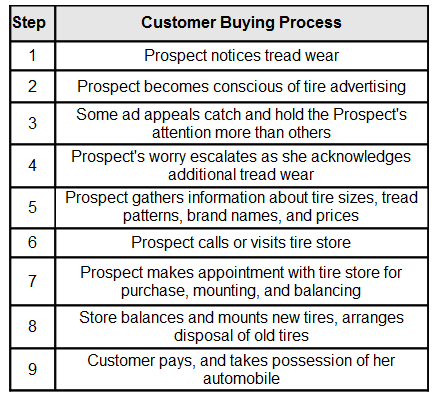
    Our tire shopping prospect likely goes through nine separate steps to buy tires.

    Tire Customer Buying Steps
    Tire Customer Buying Steps

    The Sales Process is Always Similar, but Never the Same

    So far, we’ve described the buying process, which begins with the shopper feeling a need.  Is the selling process the same?

    Usually, its not.

    The selling process begins when the seller identifies the buyer as a new prospect, and attempts to get her to engage.

    And other than advertising, the seller has no control over communication with the prospect until she identifies herself.

    In our tire purchase example the buyer has already taken five independent steps before the  seller knows she exists.

    But detailing the customer’s steps between the first interaction with the seller, and the completion of the purchase, are what allow us to standardize the process.  It’s what allows us to set our marketing on  “Cruise Control,” when we’re fishing for customers.

    Your Guide,
    Chuck McKay

    Marketing consultant Chuck McKayYour Fishing for Customers guide, Chuck McKay, gets people to buy more of what you sell.
    Got questions about detailing your customer’s shopping process? Drop Chuck a note at ChuckMcKay@ChuckMcKayOnLine.com. Or call him at 304-208-7654.


  • Reach vs Frequency – Systemic Marketing™ Part II

    Reach vs Frequency – Systemic Marketing™ Part II

    curb number
    Curb Number

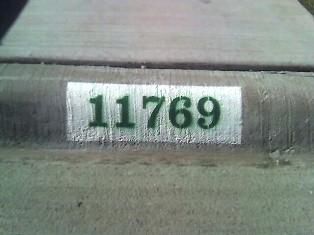
    A young man shows up at your door.  For only ten dollars he’ll paint your house number in florescent paint on the curb in front of your house. Feeling no need for glow in the dark numbers on your curb, you pass on the offer.

    The next day a different young man makes a similar offer. Again, you refuse.

    He’s followed that afternoon by a young woman with virtually the same offer. Will you buy from her?

    Believe it or not, you’ve just determined whether frequency or reach is of greater importance as a driver of sales.

    Reach Trumps Frequency

    In Systemic Marketing™ – Customer Acquisition on Cruise Control, we discussed the advantages of creating a a Marketing Cruise Control, a system to increase your marketing efforts in slack times and keep your company operating at capacity.

    But the first decision is how to increase those efforts.

    For decades media planners, buyers, and salespeople have argued whether it was more important to reach more people with your message (offer), or to deliver that message with greater repetition to the same people.

    There are good arguments for both, but common sense will guide us to the following conclusions:

    1. The more relevant the message, the more likely people are to notice it.
    2. The simpler the message, the less repetition necessary for a prospective customer to “get it.”
    3. Once a prospect has decided to purchase (or not), additional exposure to the message (during this purchase cycle) is pointless.

    What should our original young man do to sell more fluorescent numbers? Go door to door on your block again? Obviously he should choose another neighborhood and make his offer to new potential customers.

    And likewise, if you’re going to set up a Cruise Control system for customer acquisition, you won’t prompt additional sales by again offering the same people what you sell.* You’ll need to boost the number of people who receive your offer.

    How to do the Boost

    Don’t increase the number of ads in the same section of the newpaper you’re currently using. Put your new ads in a different section.

    Don’t run additional ads in the local TV six o’clock news. Run new ads in the 10 o’clock news. Run new ads on another TV station’s six o’clock news.

    1. Add a schedule on another radio station, or another TV station.
    2. Add another section of the newspaper. Or another paper.
    3. Post a billboard in a new neighborhood.
    4. Send postcards to a fresh list.
    5. Telemarket to a fresh list.
    6. Expand the radius around your business and distribute more door hangers or flyers or yard signs in neighborhoods you haven’t been “working.”
    7. Increase your pay per click budget.

    You may be tempted to pull ad dollars from the media outlets you’ve been using, but if you unhook the engine, how long can we expect that train to keep rolling? And substituting an unknown return from a new media outlet in the place of the known ROI of a tested outlet only increases risk.

    Systemic Marketing™ maximizes cash flow by eliminating speculation.

    Everyone Has Opinions

    Media people, printers, and your brother-in-law may feel qualified to opine about your marketing. Especially when you’re adding media to expose your message to additional prospects.

    Your new media representative will want to make a strong positive impression in hopes of keeping more of your business. The printer will assess your need for additional flyers, or direct response packages as an opportunity. They will offer to produce new and/or different ads. Don’t let them do that.

    By the time you’ve implemented a Marketing Cruise Control, your message will have been tested, refined, and polished. Everything from the offer to the choice of words to the colors, fonts, and images will be selected because they work better than those you tested them against.

    And testing always works better than opinions when you’re fishing for customers.

    Your Guide,
    Chuck McKay


    * OK. This is not completely true. But increasing the frequency of the message costs much more than it generates in additional sales for reason number three above. Most of the people exposed to your message will be those who’ve already decided whether or not to buy.


    Marketing consultant Chuck McKayYour Fishing for Customers guide, Chuck McKay, gets people to buy more of what you sell.
    Got questions boosting the number of people exposed to your message? Drop Chuck a note at ChuckMcKay@ChuckMcKayOnLine.com. Or call him at 304-208-7654.


  • The 7th Grade Science Lesson Business Schools Neglect

    The 7th Grade Science Lesson Business Schools Neglect

    Sir Isaac Newton
    Sir Isaac Newton

    Do you remember learning Sir Isaac Newton’s “laws of motion” in school? I wonder, were you like most of your classmates, questioning whether knowing this stuff would do you any good in the real world?

    Today I want to apply Newton’s thinking to something other than physical science. You know me: I always have to look at things differently.

    Newton’s 1st Law of Business?

    Newton’s first law of motion states that objects tend to remain in the state of motion that they’re in. We use the term inertia to describe this phenomenon. Moving objects want to keep moving. Stationary objects like to stay still,

    You can probably already see where I’m going with this.

    If you’ve ever been in business, or seriously considered launching a one, you have almost certainly experienced what I’m talking about. Getting started is hard, isn’t it?

    Changing your state of motion from stationary to forward motion takes a lot of energy. Not to mention if you have to get others to move with you! No part of the process requires more hard work than the initial phases. Think of the space shuttle. It takes two rocket boosters and a fuel tank bigger than the shuttle itself just for lift off. The rockets and fuel tank are unnecessary after the astronauts are several miles from the ground. I’m only guessing here, but I imagine that 95% of the fuel burned during the entire voyage is consumed in the first few minutes. Defeating inertia is not easy.

    Once you’ve got things started and moving along, you’ve put the Newton’s law to work on the other side of the coin. Inertia in motion is also called momentum. Everything happens more quickly and with much less effort. It becomes difficult for any external force to stop you from getting where you’re headed in the same way it’s difficult when you first get started. Like trying to stop a freight train gliding down the track.

    These principles work for your business as well.

    Let me state my point explicitly. If you’re going to accomplish anything in business (or life in general) you have to overcome your natural state of non-motion. This is the hardest part. As people in the society most of my readers live in, it is a rare occurrence to find truly action-oriented adults. (My contention is that they beat this characteristic out of students around the same time they’re teaching them about Newton’s laws of motion. But that’s another topic entirely.)

    Success Is a Choice

    Inertia is the reason that success is never accidental. It may, however, be coincidental. For example, if a microbiologist stumbled across the cure for AIDS, you couldn’t call it a total accident. He or she was messing around in the lab, and happened to make a great discovery. It’s more of co-incidence, An unexpected result came from action already being taken. See what I mean?

    The Dip

    Seth Godin wrote a best-selling book called The Dip. The book (which I haven’t actually read) describes periods of struggle during any venture that really separate the “boys from the men,” as it were. If you push through the dip, you’ll find greater success than ever before. But most people can’t summon the willpower to continue working through such a trying time. According to this law of motion, the biggest dip can be found at the very beginning of any project, check out middle school science online projects. I’m willing to bet that Seth would agree. (If you read this, Mr. Godin, feel free to chime in.)Although creating a roadmap is essential to any endeavor, thinking about doing something doesn’t count as getting started. It’s the easiest thing in the world to get excited about a new idea or vision. Moving past that stage is harder. The emotion has to be translated into motion.

    The Happily Mediocre

    It wasn’t intentional, but there are no concrete business building lessons in this article, just one overriding concept. Do something! Fear, discomfort, looking crazy, the desire to conform (and the desire of the happily mediocre keep you from shining too brightly) and plenty of other reasons stand opposed to you. You’ll have to really dig in and push forward. Once you get the ball rolling a little, you will not regret the effort. Victory is waiting on you. But you won’t win by accident.


    Donnie Bryant
    Donnie Bryant

    Marketing that works. Copy that converts. Results that matter.

    Direct response copywriter, Donnie Bryant, welcomes questions about overcoming marketing inertia. Get in touch with him through email (db@donnie-bryant.com), by phone at 312-450-9291, or follow him on Twitter: @donniebryant.

  • Customer Acquisition on Cruise Control – Systemic Marketing™

    Customer Acquisition on Cruise Control – Systemic Marketing™

    Cruise Control
    Cruise Control

    Imagine that you’re driving your car through the countryside. The road becomes slightly inclined, and your car begins to slow. You press a bit more firmly on the accelerator, and the car picks up speed again.

    But then, you encounter a rather steep hill, and your car rapidly slows. You mash the pedal down, but the car feels sluggish, and takes a while to respond. Fearing a stall, you downshift to a lower gear. The engine picks up speed, the car begins to accelerate, and you successfully ascend the hill.

    What happened to your fuel economy during this hill climbing incident? Can we agree that it suffered?

    That’s because human beings are not particularly good at recognizing change. Until that change is obvious, we don’t adjust. Then, in order to restore the optimal conditions, we frequently over adjust.

    Sometimes operating at peak performance is more a matter of luck than judgment. If only we had a device which would speed our reactions…

    Enter the Cruise Control

    The driver clicks the “set” button and a small comparator constantly checks the actual velocity against the desired velocity. The slightest change activates the throttle linkage to maintain the set speed without any intervention from the driver.

    A good cruise control system aggressively accelerates without overshooting and maintains constant road speed, regardless of the mass of the vehicle, the weight of the passengers, or the road’s degree of incline.

    Is Cruise Control a Convenience?

    Yes. Yes it is. Cruise control offers convenience. It offers other benefits, too.

    Use of such a system:

    a) requires less attention of the driver. It requires less intervention by the driver.
    b) adds a degree of predictability allowing better planning of rest stops and arrival times.
    c) makes the trip less costly by maximizing fuel efficiency in miles per gallon.

    Why doesn’t everyone use a cruise control?

    Pretty much, we all do. At least when it comes to driving.

    It’s advantages are so strong, and so desired by drivers, cruise control systems have become standard on nearly every new automobile.

    Why Isn’t Cruise Control Standard in Marketing?

    A cruise control for marketing would offer the same advantages to a company.

    a) It would necessitate less attention from the “driver” – thus, less of the driver’s intervention.
    b) It would allow for greater predictability in planning.
    c) It would operate more efficiently, and thus produce higher ROI.

    It sounds like a good entrepreneurial idea, doesn’t it – automating customer acquisition, much as an entrepreneur automates every other process in his company?

    Cruise Control Flowchart
    Cruise Control Flowchart

    The answer is a qualified, “yes.”

    Seasonal businesses can’t control the seasons. Extravagances will be subject to swings in the economy. Emergent responders can’t predict emergencies. But for a great many businesses, marketing cruise control is a very real possibility.

    It has to do with the way potential customers are identified.

    Revealed Targets, Non-Revealed Targets

    Targeting involves defining and identifying the shoppers who are most likely to purchase. The ultimate identification reveals your potential customers names and addresses. This is possible if your target has, for example, subscribed to a magazine, lives in a particular neighborhood, or must be licensed with a legal entity.

    Non-revealed targets are not identified as individuals. Non-revealed targets might include Country music fans, people who like Italian cooking, or parents considering hiring a tutor for their child.

    Revealed targets can be contacted directly. Non-revealed targets are best reached through mass media.

    Its much easier (and cost effective) for a marketing cruise control system to send offers to additional individual prospects.

    What if Your Business Ran At Full Capacity?

    Any company which will find an advantage in constantly running at full capacity will benefit from a Cruise Control system for marketing.

    • A pediatric dentist with an empty chair several hours each week.
    • A heating and air contractor with too few maintenance contracts.
    • A furniture store with inventory turning too slowly.
    • A jeweler with unpredictable demand for repairs.

    And, of course, any owner preparing his business to be sold in the next few years.

    Marketing Cruise Control is part of the Fishing for Customers Systemic MarketingTM system, which we’ll be discussing over the next few weeks. After all, it only makes sense to catch the limit when you’re fishing for customers.

    Your Guide,
    Chuck McKay

    Marketing consultant Chuck McKayYour Fishing for Customers guide, Chuck McKay, gets people to buy more of what you sell.

    Got questions about setting up a Marketing Cruise Control system for your company? Drop Chuck a note at ChuckMcKay@ChuckMcKayOnLine.com. Or call him at 304-208-7654.

  • Making Decisions

    Making Decisions

    Peter Drucker
    Peter Drucker
  • Danger in the Discount

    Danger in the Discount

    MP3 Player
    Generic MP3 Player

    Can you imagine a more idiotic challenge than to see which business can use up it’s investment capital and be forced out of business first?

    Its what happens each time a new business opens with no strategy other than to sell at a lower price.

    Dropping price doesn’t work. Long term, it never works. And in the short term it can’t create long term customers.

    Let’s create a hypothetical example:

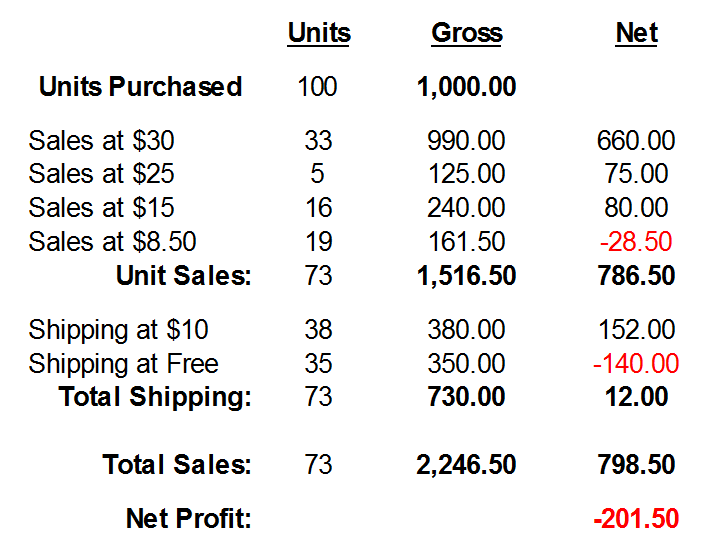
    John finds a Chinese source for an 8mb off-brand MP3 player, which he can buy in quantity for $10 each. John checks eBay and finds the comparable offerings are priced at $40 each.

    Wow,” says John. “Those other sellers are being greedy. I’ll mark mine $30 each and sell a TON of ’em.” He estimates the cost of shipping, discovering it will cost roughly $6. John decides to charge $10 for shipping “and handling.”

    Thinking he will quickly sell all 100 units at $20 profit, plus a $4 shipping markup, he’s counting on taking in $2,400, and making a net profit of $1,400.

    John invests $1,000 dollars, purchases 100 players, and is now in business. He lists them on eBay for $30, plus $10 shipping and handling.

    John is right. There is a demand at that price point. He sells 16 the first day and 17 the second.

    On the third day John makes no sales. Worried, he browses eBay to figure out why.

    What’s this? This guy “Tom” has the same player listed at $27.  Worried, John drops his price to $25, and sells five more before, again, his sales abruptly stop. He finds Tom’s eBay store is still selling them at $27. Puzzled, he digs a bit deeper and discovers “Bob” now has ’em for only $22.

    John ponders. “Well, I’ve made some money on these. I think its time to get out of the MP3 player business.” He drops his price to $15, offers free shipping, and expects to blow out the remainder and retire.

    John sells 16 more before his sales again stop. He checks. Tom is reacting to the new competition by selling his players at $11 each.

    John cuts price below his cost, and offers his last 27 units at $8.50, plus free shipping. Another 19 are sold before “Andrew” offers the same player for $7.50, and free shipping.

    Tired of losing money, John contacts Tom, Bob, and Andrew, and offers his last 27 units to them for $270. None of them take him up on the offer.

    John cancels his eBay account, and determines everyone on his Christmas list will get an MP3 player for Christmas.

    Shall we calculate John’s profit on this venture?

    John's P&L

    Ouch!

    John could be considered a dabbler. A great many eBay sellers are.

    Some, on the other hand operate real businesses. Look at the feedback scores. Nobody gets to thousands of transactions as a dabbler.

    People like John are not the folks Dun & Bradstreet speak of when they report 6 out of 10 businesses with 20 employees or less don’t make it past their first year, and 9 out of 10 don’t make it to their 10th anniversary.

    Going Out of Business sign
    Going Out of Business

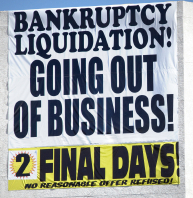
    D&B goes on to say that only 10 percent of all of the business failures in the US file for bankruptcy. The rest close voluntarily because operating their companies turn out to be way too much work for the meager income they provide.

    The biggest cause of insufficient income?

    Pricing too low.

    Why?  Because all of a new businesses operating costs are higher.

    A new businesses can’t BUY inventory at a lower price than the big box stores. It can’t ship at a lower price. And it doesn’t spend enough on advertising to buy in the bulk required to get reduced pricing there, either.

    Combine higher operating costs and lower profits with discounted pricing, and you have a situation my friend and colleague, Jeff Sexton, refers to as the “race to the bottom.”

    With lower price as your selling strategy, you’re competing with at least eight other ventures already in the process of going out of business.

    What’s the Solution?

    Raise your prices.

    C’mon, McKay,” I hear you asking.  “Just how do you suggest I raise prices in a bad economy when all of my competitors charge so little?

    Ah.  Fair question.  We’ll discuss that in a couple of days, as we continue fishing for customers.

    Your Guide,
    Chuck McKay

    Marketing consultant Chuck McKayYour Fishing for Customers guide, Chuck McKay, gets people to buy more of what you sell.
    Got questions about pricing for profit? Drop Chuck a note at ChuckMcKay@ChuckMcKayOnLine.com. Or call him at 304-523-0163.